
中学一年级 · 阅读系列
Lesson 54 · From Tap to Clean Water
文体:流程说明 · 朗读音轨 54
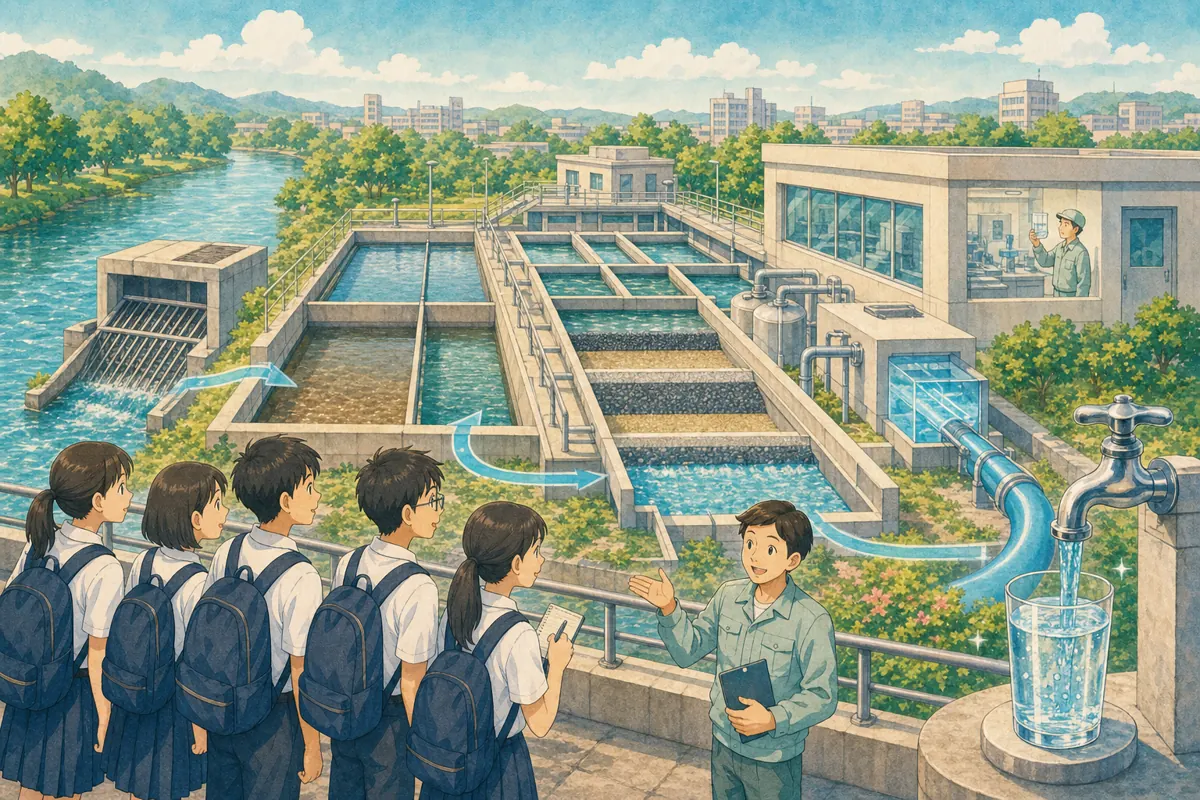
先听一遍
按顺序听一听自来水来自哪里,又经过哪些处理。
展开英文短文,再悬停查词
Water from a river or lake may travel to a treatment plant. First, a mesh removes large objects. Other steps help small particles come together and sink.
The water passes through a filter. Then workers disinfect it to reduce harmful germs. They take a test sample and check water quality.
Clean water travels through a pipe to your tap. The exact process depends on the water source. “Clear” does not always mean safe to drink, so public systems test it often.
读懂了什么?
读完后,试着用一句话说出本文的主要意思,并从原文找出支持它的一句话。
查看中文译文
来自河流或湖泊的水可能被送到自来水厂。首先,滤网拦下较大的杂物。接下来的工序让细小颗粒聚在一起,沉到水底。
水经过过滤,然后由工作人员消毒,减少有害微生物。他们还会取水样,检查水质。
处理后的水沿管道来到你家的水龙头。具体工序取决于水源。水看起来清澈,不一定就能安全饮用,所以公共供水系统需要定期检测。
本课重点词语
以下是本课重点词语的中文讲解;英文正文中有虚线的单词可悬停查看词义和发音。
- treatment plant
- 处理厂;本文指自来水净化厂。
- mesh
- 网;网眼。
- filter
- 过滤器;过滤。
- disinfect
- 消毒。
- test sample
- 用于检测的样本。
- quality
- 质量;本文指水质。
- pipe
- 管道。
- tap
- 水龙头。
- source
- 来源;水源;也可指出处。
- safe to drink
- 可以安全饮用的。
背景知识
常见的自来水处理包括混凝、沉淀、过滤和消毒,但不同地区和水源的工序会有所差异。除了水厂处理,输水管道、蓄水设施的管理及定期水质检测,也共同保障供水安全。
资料来源:U.S. EPA 关于饮用水处理技术的资料。