
高中三年级 · 阅读系列
Lesson 48 · A Song from Two Generations
文体:两代人的一首歌 · 朗读音轨 48
先听一遍
听听乐队怎样在改编中保留原曲的节奏。
展开英文短文,再悬停查词
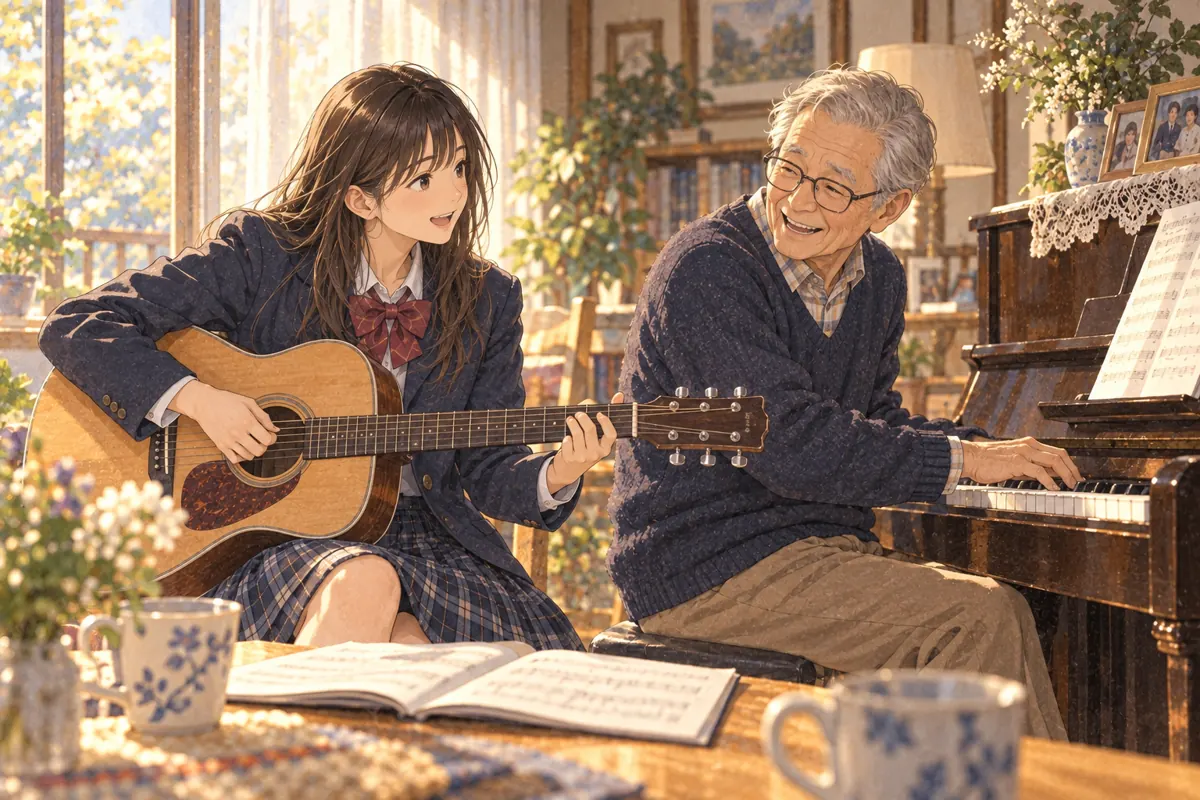
My grandfather taught me a song he used to sing while repairing fishing nets. I recorded him with permission, hoping to perform the melody at our school concert. When our band added a strong electronic beat, he said the song sounded unfamiliar. I thought he was rejecting everything new.
Instead of arguing, I asked what part he wanted us to hear. He tapped a slow rhythm on the table, explaining that the pauses gave workers time to move their hands together. We kept that rhythm in the opening and introduced new sounds only after the first verse.
At the concert, we explained where the song came from and named my grandfather as the person who had shared his version. We did not present our arrangement as an untouched tradition. He listened, smiled at one unexpected section, and suggested a change for next time.
The performance belonged to neither generation alone. It grew from a conversation about what should remain recognizable and what could be explored anew.
逐句跟读
点击任意一句听 Dicvo 的 Jenny 英语语音;开始连续播放前可选择每句播放次数。同一句的每遍之间、切换到下一句之前,都会留出约一遍句子时长供你跟读。原有整篇朗读仍可在上方播放。
请选择一句开始。
-
My grandfather taught me a song he used to sing while repairing fishing nets.
-
I recorded him with permission, hoping to perform the melody at our school concert.
-
When our band added a strong electronic beat, he said the song sounded unfamiliar.
-
I thought he was rejecting everything new.
-
Instead of arguing, I asked what part he wanted us to hear.
-
He tapped a slow rhythm on the table, explaining that the pauses gave workers time to move their hands together.
-
We kept that rhythm in the opening and introduced new sounds only after the first verse.
-
At the concert, we explained where the song came from and named my grandfather as the person who had shared his version.
-
We did not present our arrangement as an untouched tradition.
-
He listened, smiled at one unexpected section, and suggested a change for next time.
-
The performance belonged to neither generation alone.
-
It grew from a conversation about what should remain recognizable and what could be explored anew.
读懂了什么?
读完后,试着用一句话说出本文的主要意思,并从原文找出支持它的一句话。
查看中文译文
祖父教我一首过去修补渔网时唱的歌。我征得同意后录下他的歌声,想在学校音乐会上演奏旋律。乐队加进强劲的电子节拍,祖父说歌听着陌生。我以为他反对一切新东西。
我没有争辩,而是问他最希望我们听见什么。他在桌上打出缓慢的节奏,解释那些停顿让工人有时间一起挪动双手。我们在开头保留这个节奏,第一节唱过后才加入新的声音。
演出时,我们说明歌曲的来历,介绍祖父是分享这个版本的人;也没有把自己的编曲说成毫无改动的传统。他听了,在一段意外的变化处笑了,还建议下次再改一个地方。
这场演出不只属于哪一代人。它来自一场对话:哪些部分应让人认得出来,哪些部分又可以重新探索。
本课重点词语
以下是本课重点词语的中文讲解;英文正文中有虚线的单词可悬停查看词义和发音。
- generation
- 一代人;祖孙共同讨论歌曲。
- recorded
- 录音;先征得祖父同意。
- melody
- 旋律;原曲用于演出。
- electronic
- 电子的;乐队加入新节拍。
- unfamiliar
- 陌生的;祖父起初不认得。
- rejecting
- 反对;孙辈一度误解祖父。
- rhythm
- 节奏;配合修补渔网。
- verse
- 一节;新声音在第一节后加入。
- arrangement
- 编曲;不能称为原样传统。
- recognizable
- 能认出的;保留关键特点。
背景知识
祖父看重原曲与劳动动作相配的停顿;乐队听取意见后调整编曲,并说明新旧部分的来源。