
高中三年级 · 阅读系列
Lesson 49 · The Ending We Refused to Explain
文体:我们没有解释的结尾 · 朗读音轨 49
先听一遍
听听剧组为何保留信封是否拆开的悬念。
展开英文短文,再悬停查词
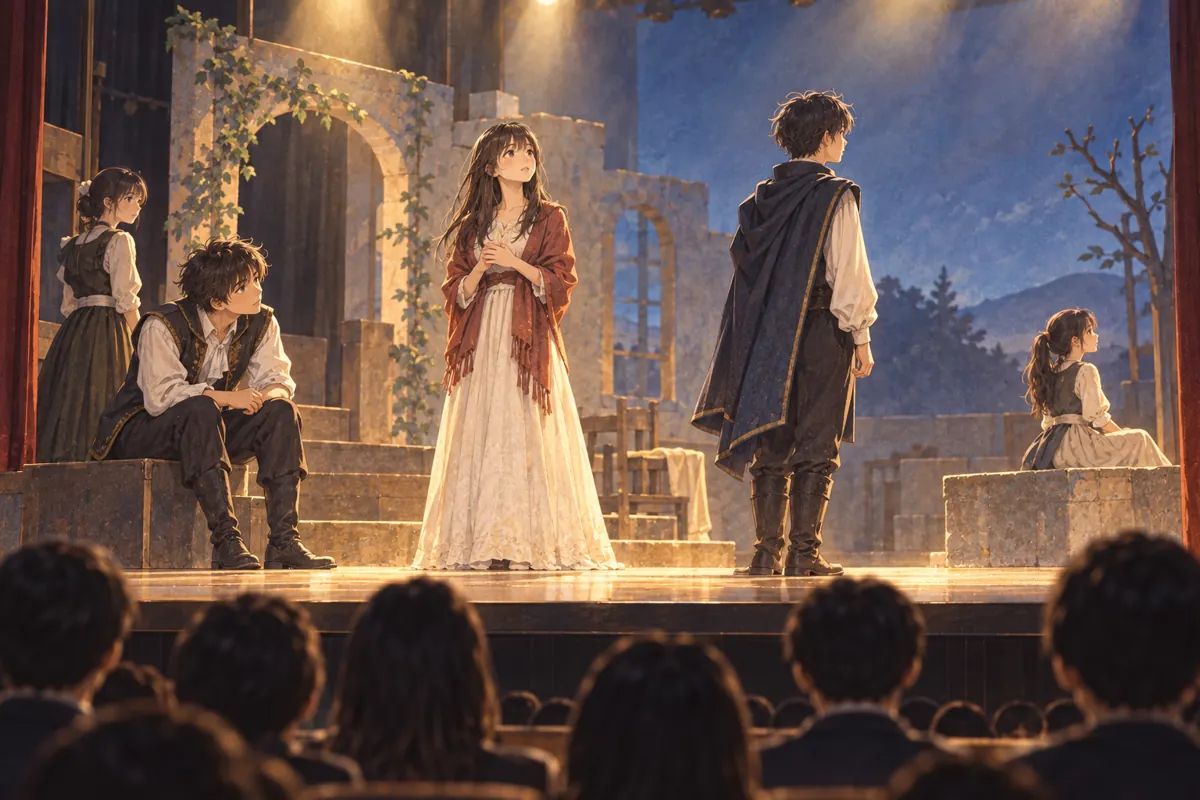
Our play ended with a student standing outside a closed classroom, holding a letter she had not opened. Some viewers wanted to know whether she would read it. The director suggested adding one final line to explain her decision, but the actors disagreed.
We were not trying to hide a weak plot. Earlier scenes had shown why the letter mattered and why opening it could change a friendship. What remained uncertain was the student's next choice. We wanted viewers to think about the reasons on both sides.
After the performance, we invited comments without announcing a correct interpretation. One visitor saw courage in waiting; another thought the student was afraid. Their disagreement made us notice details we had placed on stage almost by instinct, including how long she held the envelope before the lights faded.
An open ending can feel unfinished when a story has not earned it. For this play, the unanswered question was the point. We had built enough context for the audience to carry the choice beyond the final scene.
逐句跟读
点击任意一句听 Dicvo 的 Jenny 英语语音;开始连续播放前可选择每句播放次数。同一句的每遍之间、切换到下一句之前,都会留出约一遍句子时长供你跟读。原有整篇朗读仍可在上方播放。
请选择一句开始。
-
Our play ended with a student standing outside a closed classroom, holding a letter she had not opened.
-
Some viewers wanted to know whether she would read it.
-
The director suggested adding one final line to explain her decision, but the actors disagreed.
-
We were not trying to hide a weak plot.
-
Earlier scenes had shown why the letter mattered and why opening it could change a friendship.
-
What remained uncertain was the student's next choice.
-
We wanted viewers to think about the reasons on both sides.
-
After the performance, we invited comments without announcing a correct interpretation.
-
One visitor saw courage in waiting; another thought the student was afraid.
-
Their disagreement made us notice details we had placed on stage almost by instinct, including how long she held the envelope before the lights faded.
-
An open ending can feel unfinished when a story has not earned it.
-
For this play, the unanswered question was the point.
-
We had built enough context for the audience to carry the choice beyond the final scene.
读懂了什么?
读完后,试着用一句话说出本文的主要意思,并从原文找出支持它的一句话。
查看中文译文
话剧结尾,一位学生站在关闭的教室外,拿着一封还没拆的信。有些观众想知道她会不会读。导演建议加上最后一句,说明她的决定;演员们却不赞同。
我们不是在掩盖薄弱的情节。前面的场景已交代信为何重要,以及打开它可能如何改变一段友谊。尚未确定的是她下一步的选择。我们想让观众思考两边的理由。
演出后,我们邀请观众评论,却不宣布标准解释。一位访客觉得等待需要勇气;另一位认为学生是害怕。他们的分歧提醒我们注意到舞台上几乎凭直觉安排的细节,例如灯光暗下前,她握着信封多久。
若故事没铺垫好,开放式结尾会让人觉得没写完。对这部戏,未回答的问题正是核心:我们给了观众足够的背景,让他们把选择带出最后一幕。
本课重点词语
以下是本课重点词语的中文讲解;英文正文中有虚线的单词可悬停查看词义和发音。
- director
- 导演;提议增加一句解释。
- actors
- 演员;反对说破选择。
- plot
- 情节;开放结尾仍需铺垫。
- uncertain
- 未确定的;人物下一步。
- interpretation
- 解释;剧组不设标准答案。
- instinct
- 直觉;某些舞台安排起初如此。
- envelope
- 信封;人物一直握在手中。
- faded
- 渐暗;灯光结束舞台画面。
- unfinished
- 未完成的;缺乏铺垫时会如此。
- context
- 背景;让观众理解两难。
背景知识
前文已建立人物关系与抉择的原因;剧组有意保留结尾,让观众根据已有背景自行思考。