
高中一年级 · 阅读系列
Lesson 22 · A Battery's Long Journey
文体:项目记录 · 朗读音轨 22
先听一遍
听听旧电池为什么不能直接投入普通回收箱。
展开英文短文,再悬停查词
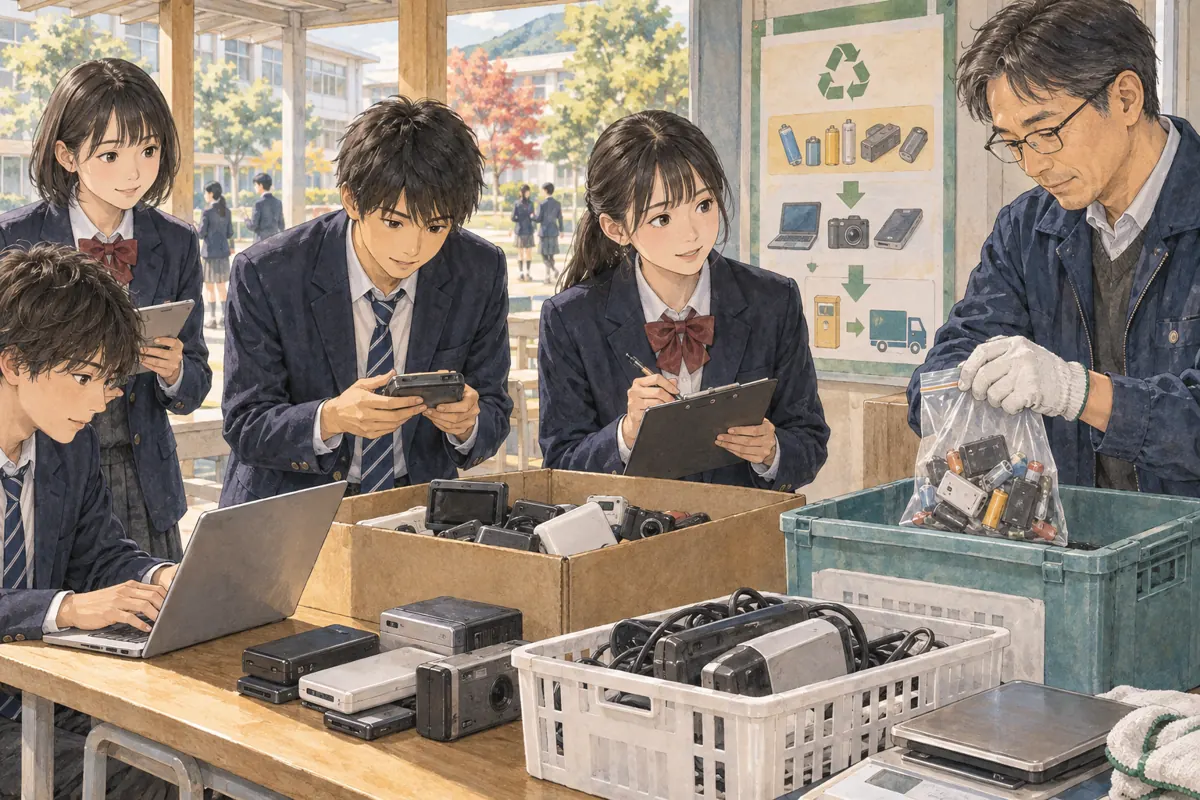
When our class collected old devices for a repair project, we found a drawer full of rechargeable batteries. Someone suggested putting them in the ordinary recycling box. Our teacher stopped us. Battery collection follows special local rules, she said, and damaged batteries need particular care.
We contacted the town's waste office and checked which collection point would accept them. An adult handled the batteries while we made a list of the devices they had come from. We learned that a battery's story did not begin or end in our classroom. Materials had been mined, made into parts, used in products, and then needed careful handling after use.
The class decided to repair only devices that could be checked safely. We also made a sign reminding students to ask the local collection office before disposing of batteries.
I had thought of an old battery as something with no value. Now I see it as one stage in a longer journey of materials, people, and choices.
逐句跟读
点击任意一句听 Dicvo 的 Jenny 英语语音;开始连续播放前可选择每句播放次数。同一句的每遍之间、切换到下一句之前,都会留出约一遍句子时长供你跟读。原有整篇朗读仍可在上方播放。
请选择一句开始。
-
When our class collected old devices for a repair project, we found a drawer full of rechargeable batteries.
-
Someone suggested putting them in the ordinary recycling box.
-
Our teacher stopped us.
-
Battery collection follows special local rules, she said, and damaged batteries need particular care.
-
We contacted the town's waste office and checked which collection point would accept them.
-
An adult handled the batteries while we made a list of the devices they had come from.
-
We learned that a battery's story did not begin or end in our classroom.
-
Materials had been mined, made into parts, used in products, and then needed careful handling after use.
-
The class decided to repair only devices that could be checked safely.
-
We also made a sign reminding students to ask the local collection office before disposing of batteries.
-
I had thought of an old battery as something with no value.
-
Now I see it as one stage in a longer journey of materials, people, and choices.
读懂了什么?
读完后,试着用一句话说出本文的主要意思,并从原文找出支持它的一句话。
查看中文译文
我们班为维修项目收集旧设备时,发现一个抽屉里装满了充电电池。有人提议把它们放进普通回收箱,老师马上阻止了我们。她说,电池回收要遵守当地的专门规定,损坏的电池尤其需要小心处理。
我们联系镇上的废弃物管理部门,确认哪个回收点接收这些电池。由一位成年人负责接触和搬运电池,我们则列出它们来自哪些设备。我们了解到,电池的经历并非始于教室,也不会在这里结束:材料先被开采,加工成零件,用进产品,使用后仍须妥善处理。
全班决定,只修理那些能安全检查的设备。我们还制作了提示牌,提醒同学丢弃电池前先向当地回收部门咨询。
过去我觉得,旧电池就是没有价值的东西。现在,我把它看作材料、人与选择所构成的漫长过程中的一个阶段。
本课重点词语
以下是本课重点词语的中文讲解;英文正文中有虚线的单词可悬停查看词义和发音。
- rechargeable
- 可充电的;抽屉里的电池类型。
- ordinary
- 普通的;不应直接使用一般回收箱。
- collection point
- 回收点;需要确认是否接收电池。
- accept
- 接收;当地部门说明可送往哪里。
- handle
- 处理、接触;由成年人搬运电池。
- material
- 材料;电池包含经过加工的原料。
- mine
- 开采;材料进入产品前的一个环节。
- dispose of
- 丢弃;先询问当地回收规定。
- stage
- 阶段;旧电池仍处于材料流转过程中。
- journey
- 旅程;用来比喻材料的长期流转。
背景知识
不同地区对电池回收有具体要求;损坏电池更须谨慎。文中学生先向当地部门查询,由成年人处理电池,再决定哪些设备适合安全维修。