
High 1 · Reading series
Lesson 49 · The Song We Could Not Translate
Audio track 49
Listen first
Listen once before opening the English passage.
Open the English passage and hover for word help
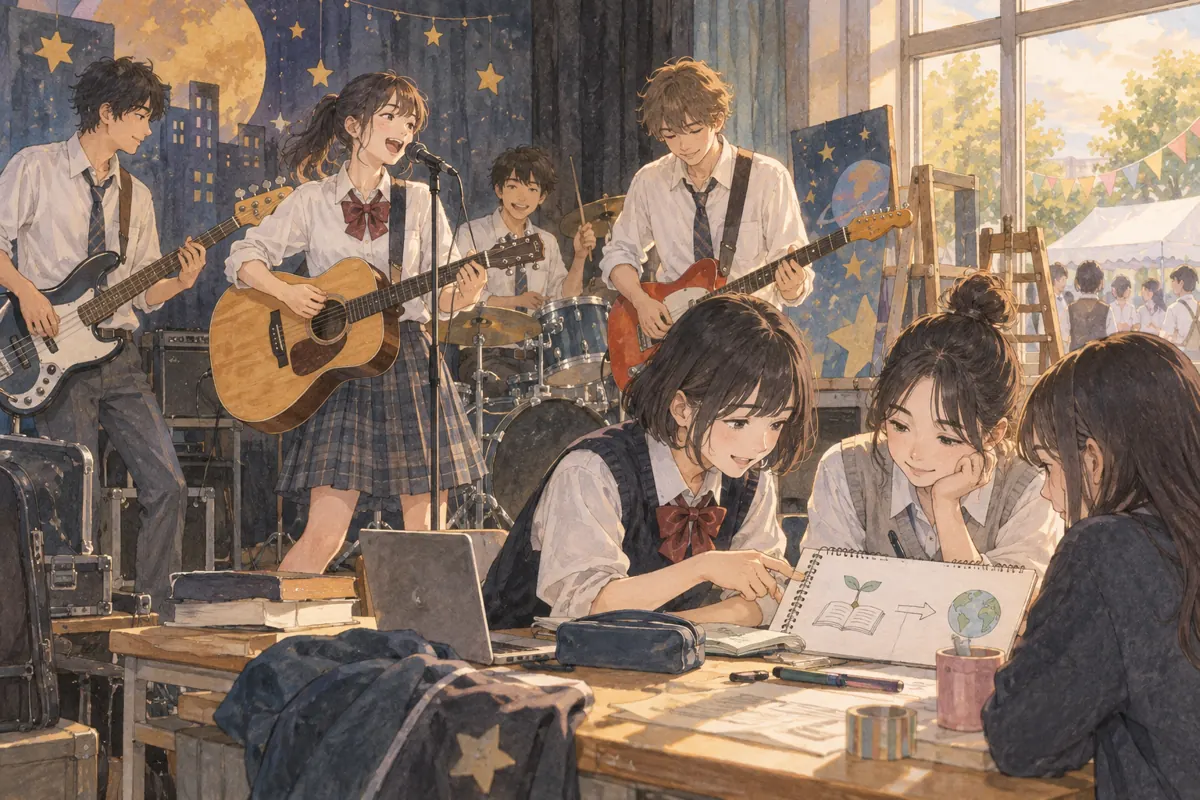
Our class planned to perform an original song at the festival and show an English explanation for visitors. The chorus used a Japanese word with two meanings. One meaning was about light; the other was about hope. A direct translation kept only one.
We tried to fit both meanings into a short English line, but the rhythm became awkward. A friend suggested that we separate two jobs: keep the song as it was and write a short note explaining the double meaning. Visitors could enjoy the sound first and understand the idea afterward.
We asked the student who had written the song whether our note matched her intention. She changed one phrase because we had made the message sound more certain than she wanted. The final explanation left room for listeners to make their own connection.
Translation was not just replacing Japanese words with English ones. We had to decide what the performance and the note would each carry.
Sentence practice
Play any sentence in Dicvo’s Jenny English voice. Before playing all, choose how many times each sentence plays. A practice pause about as long as the sentence follows each play, including before the next sentence. The complete reading remains above.
Choose a sentence to begin.
-
Our class planned to perform an original song at the festival and show an English explanation for visitors.
-
The chorus used a Japanese word with two meanings.
-
One meaning was about light; the other was about hope.
-
A direct translation kept only one.
-
We tried to fit both meanings into a short English line, but the rhythm became awkward.
-
A friend suggested that we separate two jobs: keep the song as it was and write a short note explaining the double meaning.
-
Visitors could enjoy the sound first and understand the idea afterward.
-
We asked the student who had written the song whether our note matched her intention.
-
She changed one phrase because we had made the message sound more certain than she wanted.
-
The final explanation left room for listeners to make their own connection.
-
Translation was not just replacing Japanese words with English ones.
-
We had to decide what the performance and the note would each carry.
Check your understanding
After reading, state the main idea in one sentence and find a line that supports it.
Chinese translation
班级打算在节庆上表演一首原创歌曲,并为访客提供英文说明。副歌里有个日语词,一层意思与光有关,另一层与希望有关。直接翻译只能保留其中一层。
我们试着在一句简短英文歌词里放进两个意思,节奏却变得别扭。朋友建议把两项任务分开:歌曲保持原样,另写一段短注释,说明双关之处。这样,访客可以先欣赏声音,再理解其中的想法。
我们请写歌的同学核对注释是否符合她的本意。她改了其中一个说法,因为我们把歌曲的意思讲得比她本想表达的更确定。最终说明也留出空间,让听众建立自己的联想。
翻译并非只把日语词换成英语词。我们还得决定,表演和注释各自要承载什么。
Key words and expressions
Key terms have Chinese explanations. Hover over dotted words in the English passage for word help and pronunciation when available.
- perform
- 表演;班级在节庆演唱歌曲。
- original
- 原创的;歌曲由同学创作。
- chorus
- 副歌;包含双关词的部分。
- direct translation
- 直译;只能保留一层含义。
- rhythm
- 节奏;硬塞两层意思会受影响。
- awkward
- 别扭的;英文歌词不再顺口。
- double meaning
- 双重含义;词语同时关联光与希望。
- intention
- 本意;写歌同学要核对说明。
- certain
- 确定的;注释原先说得太死。
- carry
- 承载;歌曲与注释各自传达内容。
Background notes (Chinese)
原文没有写出具体日语词,只说明它有‘光’与‘希望’两层意义。学生保留歌曲,另加说明,并请作者确认语气,避免把开放的意象解释得过死。