
High 1 · Reading series
Lesson 48 · A Comic without a Villain
Audio track 48
Listen first
Listen once before opening the English passage.
Open the English passage and hover for word help
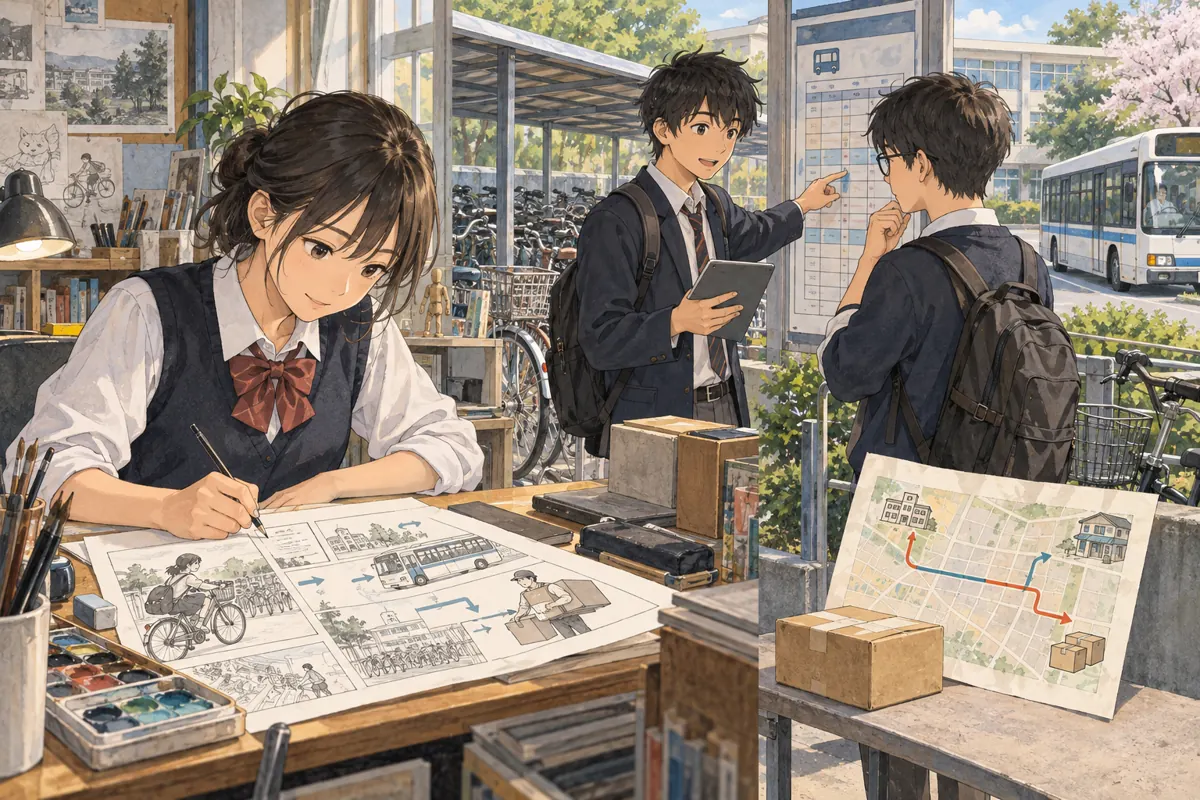
I drew a comic about the bicycle racks at school. In my first version, one student parked badly and blocked the path. The story was simple, but it made the problem look like one careless person's fault.
Then I spent a week watching the area after school. The racks filled quickly; students arriving later had nowhere clear to park. Delivery workers also needed the path for carts. Some students hurried to catch a bus, while others stayed for clubs. The space had to serve several different schedules.
I rewrote the comic with three characters who each had a reasonable goal. They disagreed, measured the narrow path, and asked the school to test a different arrangement. Nobody became the villain, and the ending was not a magic solution.
The new comic was harder to draw. It was also more interesting. Instead of asking readers whom to blame, it invited them to notice how the place shaped everyone's choices.
Sentence practice
Play any sentence in Dicvo’s Jenny English voice. Before playing all, choose how many times each sentence plays. A practice pause about as long as the sentence follows each play, including before the next sentence. The complete reading remains above.
Choose a sentence to begin.
-
I drew a comic about the bicycle racks at school.
-
In my first version, one student parked badly and blocked the path.
-
The story was simple, but it made the problem look like one careless person's fault.
-
Then I spent a week watching the area after school.
-
The racks filled quickly; students arriving later had nowhere clear to park.
-
Delivery workers also needed the path for carts.
-
Some students hurried to catch a bus, while others stayed for clubs.
-
The space had to serve several different schedules.
-
I rewrote the comic with three characters who each had a reasonable goal.
-
They disagreed, measured the narrow path, and asked the school to test a different arrangement.
-
Nobody became the villain, and the ending was not a magic solution.
-
The new comic was harder to draw.
-
It was also more interesting.
-
Instead of asking readers whom to blame, it invited them to notice how the place shaped everyone's choices.
Check your understanding
After reading, state the main idea in one sentence and find a line that supports it.
Chinese translation
我画了一篇关于学校自行车架的漫画。第一版里,一个学生乱停车,堵住了通道。故事很简单,却把问题写成了一个粗心人的错。
后来,我花一周观察放学后的停车区。车架很快停满,晚到的学生找不到合适的车位。送货员也要推车经过那条路。有的学生赶着坐公交车,有的留校参加社团。这块地方得适应几种不同的时间安排。
我重写漫画,让三个人物各自都有合理目标。他们意见不一,测量狭窄的通道,并请学校试行另一种布局。没有谁成为反派,结尾也不是凭空出现的神奇办法。
新版更难画,却也更有意思。它不再让读者只想着责怪谁,而是邀请他们注意:场地怎样影响每个人的选择。
Key words and expressions
Key terms have Chinese explanations. Hover over dotted words in the English passage for word help and pronunciation when available.
- bicycle rack
- 自行车架;放学后很快停满。
- block the path
- 堵住通道;第一版中的情节。
- careless
- 粗心的;最初被归咎的学生。
- fault
- 过错;问题不只属于某一人。
- delivery worker
- 送货员;也需使用通道。
- serve
- 满足……需要;空间要适应多种日程。
- reasonable
- 合理的;三个人物各有目标。
- arrangement
- 布局;学校可试行新的安排。
- villain
- 反派;新版没有单一坏人。
- blame
- 责怪;新版引导读者超越找人背锅。
Background notes (Chinese)
乱停的表象背后还有停车位数量、送货通道和不同放学时间等因素。作者用观察到的复杂情境重写漫画,避免把系统问题简单归咎于一个人。