
High 1 · Reading series
Lesson 28 · The Lunch We Did Not Waste
Audio track 28
Listen first
Listen once before opening the English passage.
Open the English passage and hover for word help
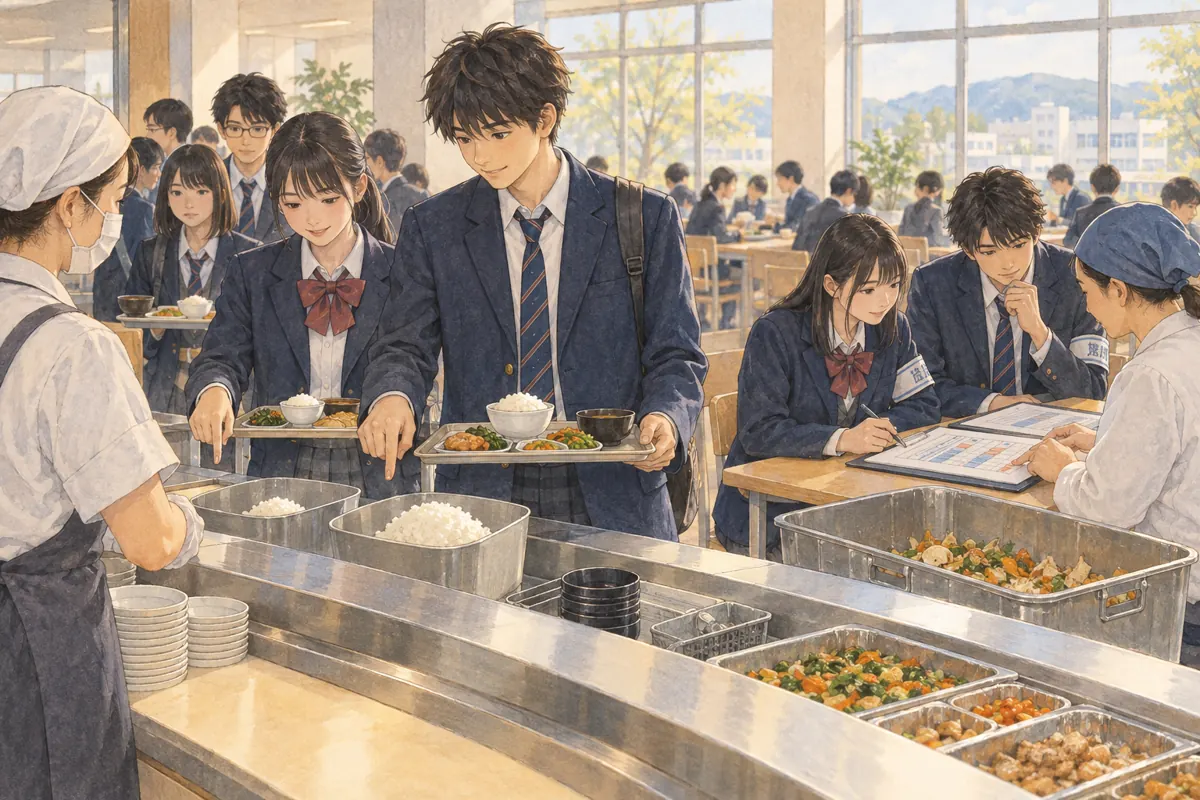
Our cafeteria served the same amount of rice to everyone. Some students wanted more after sports practice; others left part of their rice because the serving was too large. The student council asked whether we could reduce waste without telling anyone to eat more than they wanted.
For two weeks, the cafeteria offered a choice between a small and a regular serving. Staff kept a simple record of how much cooked rice was left at the end of lunch. We also asked students whether the new choice was easy to understand.
Less rice was thrown away during the trial, but we were careful with our conclusion. The menu and number of students had changed on some days. We suggested continuing the choice and checking the records for a longer period.
The useful change was not a speech about “finishing everything.” It was a system that let people choose a portion closer to what they would actually eat.
Sentence practice
Play any sentence in Dicvo’s Jenny English voice. Before playing all, choose how many times each sentence plays. A practice pause about as long as the sentence follows each play, including before the next sentence. The complete reading remains above.
Choose a sentence to begin.
-
Our cafeteria served the same amount of rice to everyone.
-
Some students wanted more after sports practice; others left part of their rice because the serving was too large.
-
The student council asked whether we could reduce waste without telling anyone to eat more than they wanted.
-
For two weeks, the cafeteria offered a choice between a small and a regular serving.
-
Staff kept a simple record of how much cooked rice was left at the end of lunch.
-
We also asked students whether the new choice was easy to understand.
-
Less rice was thrown away during the trial, but we were careful with our conclusion.
-
The menu and number of students had changed on some days.
-
We suggested continuing the choice and checking the records for a longer period.
-
The useful change was not a speech about “finishing everything.”
-
It was a system that let people choose a portion closer to what they would actually eat.
Check your understanding
After reading, state the main idea in one sentence and find a line that supports it.
Chinese translation
食堂给每个人盛同样多的米饭。体育训练后有的同学还想再吃,有的同学则因份量太大而剩下米饭。学生会提出一个问题:能否减少浪费,同时不要求任何人吃下自己不想吃的东西?
接下来两周,食堂让学生选择小份或常规份。工作人员简单记录每天午餐结束时剩下多少熟米饭。我们也询问同学,新的选择是否容易理解。
试行期间,丢掉的米饭减少了,但我们对结论仍很谨慎。有些日子的菜单和就餐人数发生了变化。我们建议继续提供份量选择,并在更长一段时间里查看记录。
真正有用的改变,不是劝大家‘必须吃光’,而是让每个人能选一份更接近自己实际食量的米饭。
Key words and expressions
Key terms have Chinese explanations. Hover over dotted words in the English passage for word help and pronunciation when available.
- amount
- 数量;原来每人米饭一样多。
- serving
- 一份;可选小份或常规份。
- reduce waste
- 减少浪费;学生会提出的目标。
- offer a choice
- 提供选择;食堂调整供餐方式。
- regular
- 常规的;与小份相对。
- record
- 记录;工作人员登记剩饭量。
- trial
- 试行;两周的尝试。
- conclusion
- 结论;学生对结果保持谨慎。
- period
- 一段时间;建议延长观察。
- portion
- 份量;应接近个人实际食量。
Background notes (Chinese)
份量选择让不同食量的学生自行决定,同时可能减少剩饭。试行期的结果还受菜单和人数影响,需要持续记录才能更稳妥地判断效果。