
High 1 · Reading series
Lesson 27 · What the River Carried
Audio track 27
Listen first
Listen once before opening the English passage.
Open the English passage and hover for word help
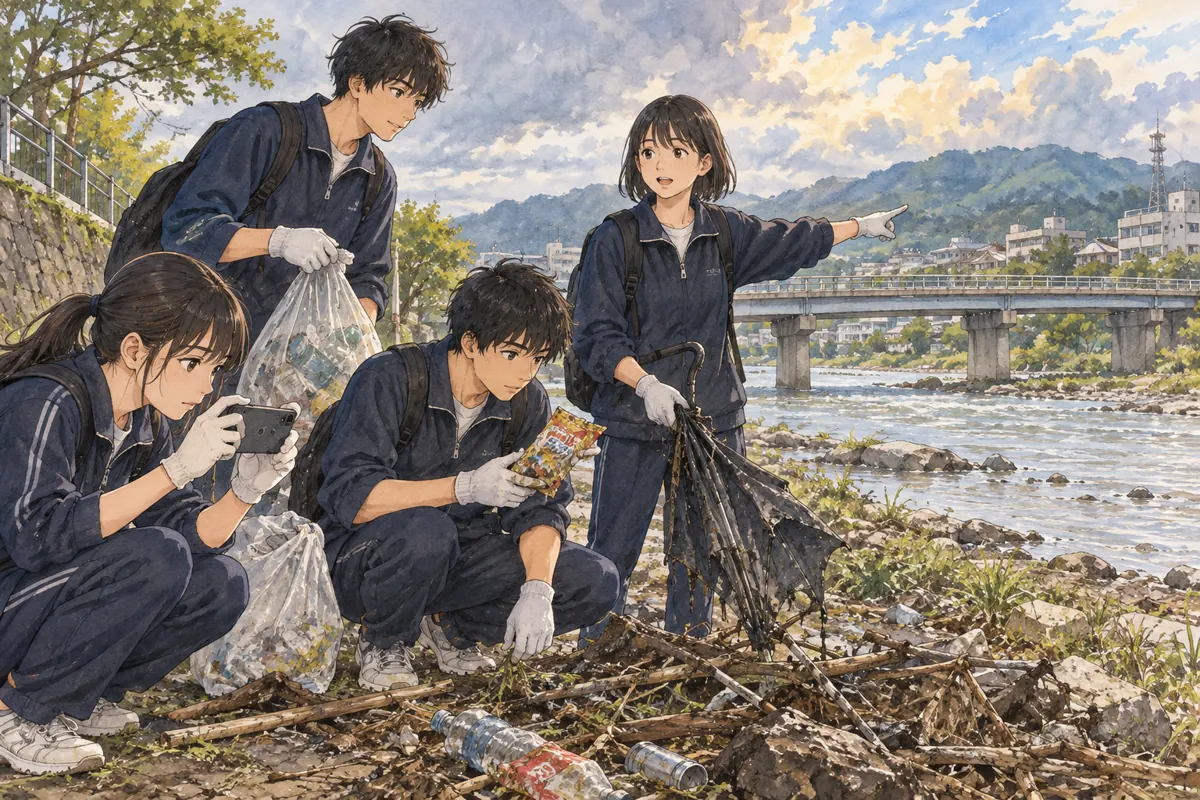
After a storm, our volunteer group cleaned a short section of riverbank. We found food wrappers, a broken umbrella, and pieces of plastic. I wanted to say that people in our town had been careless, but our leader asked us not to decide where each object had come from just by looking at it.
Water could carry objects from farther upstream. Some items might have fallen from a nearby path. We photographed what we found, counted broad types of litter, and told the local office about the sharp pieces we could not safely collect.
At the end, the bank looked better, but the river was not “fixed.” We had cleaned one place on one day. Our notes might help the next group notice whether the same kinds of objects appeared after another storm.
I still felt proud of the bags we had filled. I also understood why the leader had asked for careful words. The objects told us what was there, not automatically who was responsible.
Sentence practice
Play any sentence in Dicvo’s Jenny English voice. Before playing all, choose how many times each sentence plays. A practice pause about as long as the sentence follows each play, including before the next sentence. The complete reading remains above.
Choose a sentence to begin.
-
After a storm, our volunteer group cleaned a short section of riverbank.
-
We found food wrappers, a broken umbrella, and pieces of plastic.
-
I wanted to say that people in our town had been careless, but our leader asked us not to decide where each object had come from just by looking at it.
-
Water could carry objects from farther upstream.
-
Some items might have fallen from a nearby path.
-
We photographed what we found, counted broad types of litter, and told the local office about the sharp pieces we could not safely collect.
-
At the end, the bank looked better, but the river was not “fixed.”
-
We had cleaned one place on one day.
-
Our notes might help the next group notice whether the same kinds of objects appeared after another storm.
-
I still felt proud of the bags we had filled.
-
I also understood why the leader had asked for careful words.
-
The objects told us what was there, not automatically who was responsible.
Check your understanding
After reading, state the main idea in one sentence and find a line that supports it.
Chinese translation
暴风雨过后,我们的志愿小组清理了一小段河岸。我们找到食品包装纸、一把坏伞和塑料碎片。我很想说,镇上的人太不注意了;可负责人提醒我们,不能只看物品就断定它们来自哪里。
水可能把东西从上游更远处带来,也有些东西可能从附近小路掉进河里。我们拍下发现的物品,粗略统计垃圾种类,并把无法安全捡拾的尖锐碎片告知当地管理部门。
结束时,河岸看起来干净了些,但整条河并没有因此‘修好’。我们只在某一天清理了一个地方。记录也许能帮助下一组观察:下次暴风雨后,是否又出现同类物品。
看着装满的垃圾袋,我仍为大家的努力自豪,也明白负责人为何要求措辞谨慎。物品告诉我们那里有什么,却不会自动告诉我们谁该负责。
Key words and expressions
Key terms have Chinese explanations. Hover over dotted words in the English passage for word help and pronunciation when available.
- riverbank
- 河岸;志愿者清理的地方。
- wrapper
- 包装纸;发现的一类垃圾。
- careless
- 粗心的;主人公起初想责怪镇民。
- upstream
- 上游;物品可能随水从那里来。
- broad type
- 大类;记录垃圾时采用粗略分类。
- litter
- 垃圾;河岸发现的废弃物。
- sharp
- 尖锐的;不宜由学生直接捡拾。
- fix
- 解决、修好;清理一处不等于治理整条河。
- appear
- 出现;下次雨后可能再见同类物品。
- responsible
- 负有责任的;不能只凭垃圾判定是谁。
Background notes (Chinese)
河流会把垃圾从上游带往下游。一次清理改善了一个河岸片段,不能据此判定全部来源或解决整个问题;分类记录有助于后续观察。