
中学一年级 · 阅读系列
Lesson 21 · Why Is the Sky Blue?
文体:问答 · 朗读音轨 21
先听一遍
边听边想:阳光进入大气层后会怎样?
展开英文短文,再悬停查词
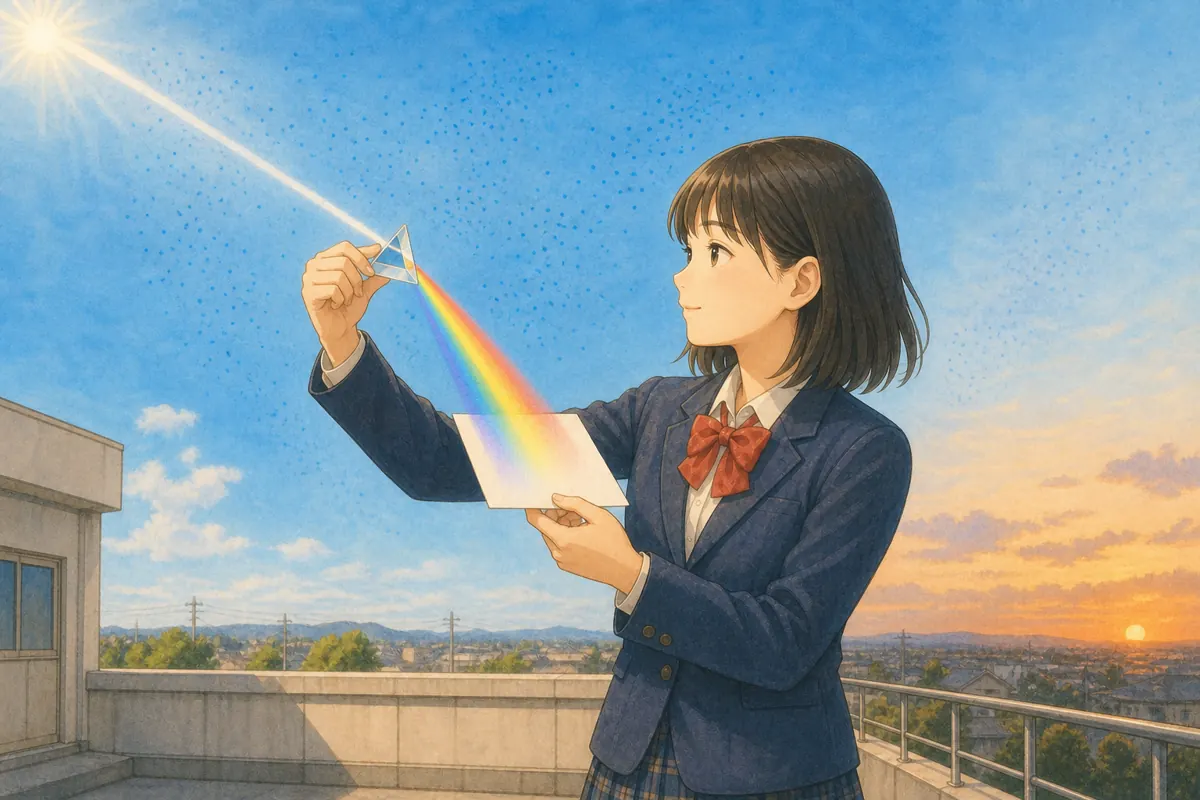
Sunlight looks white, but it has many colors. When it reaches Earth’s atmosphere, it meets very small particles of air. Blue light travels in shorter waves than red light. The particles scatter blue light in every direction.
That is why most of the sky looks blue. At sunset, sunlight travels through more air. More blue light scatters away, so red and orange light become easier to see.
逐句跟读
点击任意一句听 Dicvo 的 Jenny 英语语音;开始连续播放前可选择每句播放次数。同一句的每遍之间、切换到下一句之前,都会留出约一遍句子时长供你跟读。原有整篇朗读仍可在上方播放。
请选择一句开始。
-
Sunlight looks white, but it has many colors.
-
When it reaches Earth’s atmosphere, it meets very small particles of air.
-
Blue light travels in shorter waves than red light.
-
The particles scatter blue light in every direction.
-
That is why most of the sky looks blue.
-
At sunset, sunlight travels through more air.
-
More blue light scatters away, so red and orange light become easier to see.
读懂了什么?
读完后,试着用一句话说出本文的主要意思,并从原文找出支持它的一句话。
查看中文译文
阳光看起来是白色的,其实包含许多颜色。阳光进入地球大气层时,会遇到空气中极小的粒子。蓝光的波长比红光短;这些粒子把蓝光散射到各个方向。
这就是天空大部分时候看起来是蓝色的原因。日落时,阳光穿过的大气更厚,更多蓝光被散射开,红光和橙光便更容易被看见。
本课重点词语
以下是本课重点词语的中文讲解;英文正文中有虚线的单词可悬停查看词义和发音。
- sunlight
- 阳光;日光。
- reach
- 到达;抵达。
- atmosphere
- 大气层;包围地球的气体层。
- particle
- 粒子;很小的颗粒。
- shorter than ...
- 比……短;比较结构。
- wave
- 波;本文指光波。
- scatter
- 散射;向各个方向散开。
- direction
- 方向。in every direction 意为‘向四面八方’。
- most of ...
- ……的大部分。
- sunset
- 日落;傍晚。
背景知识
光遇到物体时,可能反射、折射或散射。在地球大气层中,波长较短的蓝光比红光散射得更多。火星的大气和尘埃与地球不同,所以白天的天空颜色也不同。
资料来源:NASA Space Place, Why Is the Sky Blue?