
Level 1 · Reading series
Lesson 20 · A Bento Without Waste
Audio track 20
Listen first
Listen once before opening the English passage.
Open the English passage and hover for word help
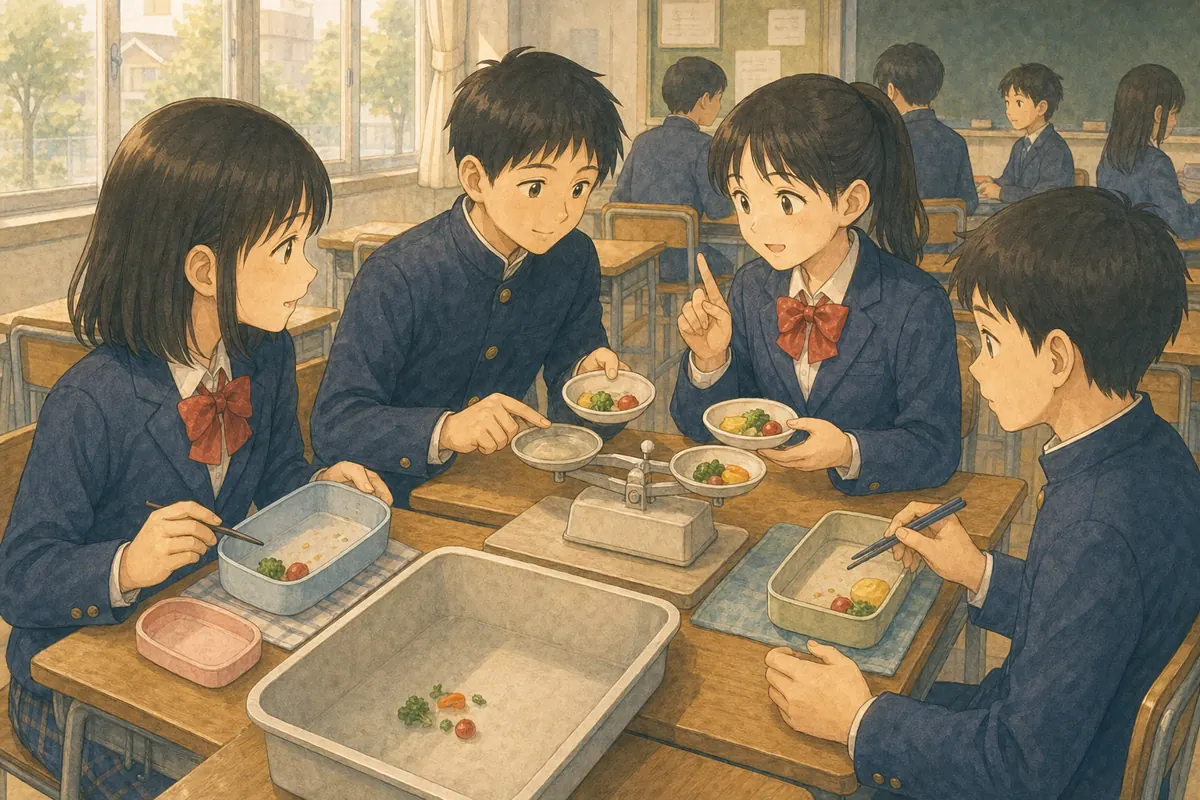
Class 1-B checks its lunch waste for one week. Many students leave small leftovers in their lunch boxes.
The class makes a plan. Students choose a smaller portion when they are not very hungry. They can take more later. They do not have to finish food when they feel sick.
After one week, the class throws away less food. A small choice can reduce waste.
Sentence practice
Play any sentence in Dicvo’s Jenny English voice. Before playing all, choose how many times each sentence plays. A practice pause about as long as the sentence follows each play, including before the next sentence. The complete reading remains above.
Choose a sentence to begin.
-
Class 1-B checks its lunch waste for one week.
-
Many students leave small leftovers in their lunch boxes.
-
The class makes a plan.
-
Students choose a smaller portion when they are not very hungry.
-
They can take more later.
-
They do not have to finish food when they feel sick.
-
After one week, the class throws away less food.
-
A small choice can reduce waste.
Check your understanding
After reading, state the main idea in one sentence and find a line that supports it.
Chinese translation
一年 B 班连续一周记录午餐浪费的情况。许多学生的饭盒里都会剩下一点食物。
班里制订了计划:如果不太饿,先取小份;稍后还可以再添。身体不舒服时,也不必勉强自己把食物吃完。
一周后,班里扔掉的食物变少了。一个小小的选择,也能减少浪费。
Key words and expressions
Key terms have Chinese explanations. Hover over dotted words in the English passage for word help and pronunciation when available.
- waste
- 浪费;垃圾。也可作动词‘浪费’。
- leftover
- 剩饭;剩余的食物。
- lunch box
- 午餐盒;饭盒。
- plan
- 计划;制订计划。
- portion
- 一份;分配给一个人的量。
- hungry
- 饿的。
- take more
- 再拿一些;追加。
- finish
- 完成;吃完。
- throw away
- 扔掉。
- reduce
- 减少。
Background notes (Chinese)
减少食物浪费,并不等于强迫每个人吃光。让人先选适合自己的分量,也有帮助。不过,已经分出去的食物有时因卫生要求不能放回去。要兼顾学校规定与健康,用可行的办法减少浪费。