
高中三年级 · 阅读系列
Lesson 29 · The Electricity on a Cloudy Day
文体:多云日的电力 · 朗读音轨 29
先听一遍
听听阴天的太阳能发电数字应如何解读。
展开英文短文,再悬停查词
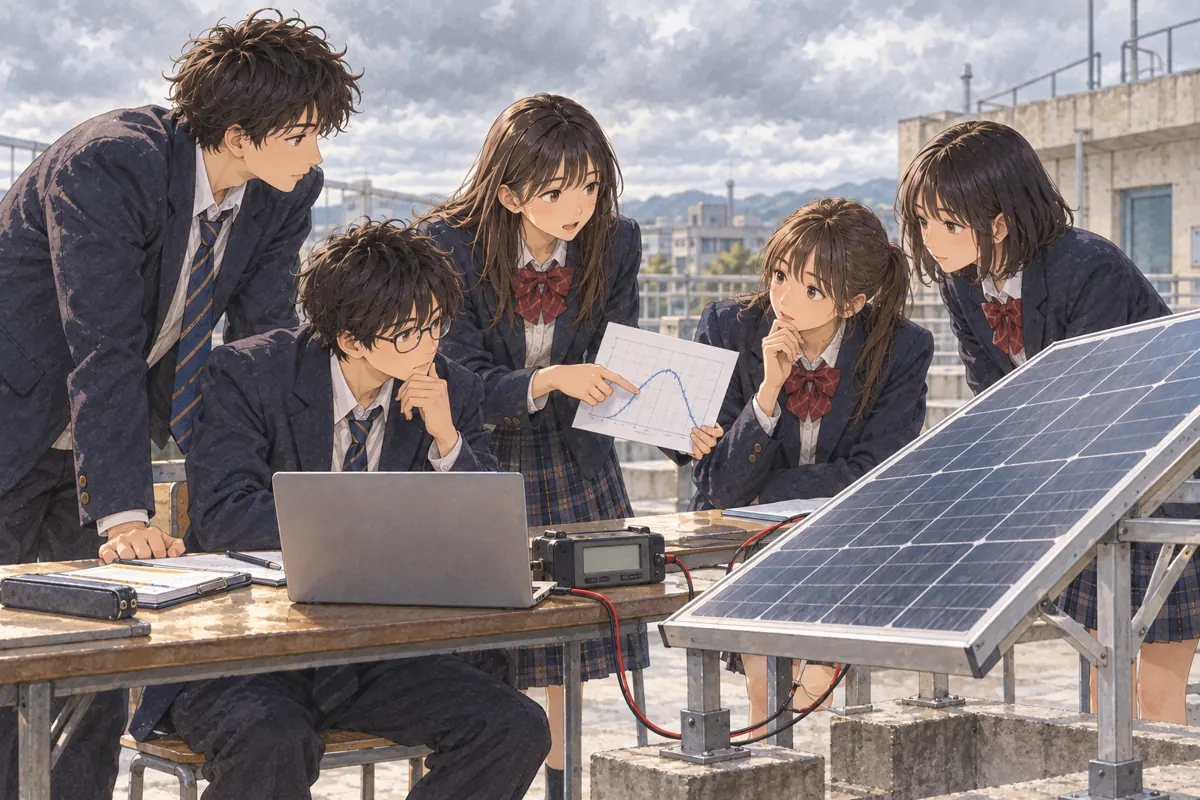
Our school installed a small solar display beside the science room. On sunny days, its numbers rose quickly. During a week of clouds, a classmate announced that the panels were “not working.” We checked the display and found that it still recorded electricity, though less than on clear afternoons.
With our teacher, we compared readings taken at similar times and noted cloud cover. We also learned that the classroom's total electricity use was a separate number. The display could show what the panels produced, not whether the whole building could operate on them alone.
For our presentation, we drew two lines: production and demand. They changed differently through the day. We avoided promising that the panels would supply every need, and we did not call a cloudy day a failure. Instead, we asked what other sources and storage choices the school used.
The display had first looked like a score. Read beside demand and weather, it became a way to understand how a useful technology fits into a larger system.
逐句跟读
点击任意一句听 Dicvo 的 Jenny 英语语音;开始连续播放前可选择每句播放次数。同一句的每遍之间、切换到下一句之前,都会留出约一遍句子时长供你跟读。原有整篇朗读仍可在上方播放。
请选择一句开始。
-
Our school installed a small solar display beside the science room.
-
On sunny days, its numbers rose quickly.
-
During a week of clouds, a classmate announced that the panels were “not working.”
-
We checked the display and found that it still recorded electricity, though less than on clear afternoons.
-
With our teacher, we compared readings taken at similar times and noted cloud cover.
-
We also learned that the classroom's total electricity use was a separate number.
-
The display could show what the panels produced, not whether the whole building could operate on them alone.
-
For our presentation, we drew two lines: production and demand.
-
They changed differently through the day.
-
We avoided promising that the panels would supply every need, and we did not call a cloudy day a failure.
-
Instead, we asked what other sources and storage choices the school used.
-
The display had first looked like a score.
-
Read beside demand and weather, it became a way to understand how a useful technology fits into a larger system.
读懂了什么?
读完后,试着用一句话说出本文的主要意思,并从原文找出支持它的一句话。
查看中文译文
学校在科学教室旁装了一块小型太阳能显示屏。晴天,数字很快上升。接连一周多云,有位同学说太阳能板“没在工作”。我们看了显示屏,发现它仍记录到电量,只是比晴朗的下午少。
在老师指导下,我们比较相近时间的读数,也记下云量。我们还了解到,教室总用电量是另一个数字。显示屏能告诉我们太阳能板生产了多少电,却不能单独说明整栋楼能否只靠它供电。
做介绍时,我们画出两条线:发电量和用电需求。一天之中,它们变化的方式不同。我们没有承诺太阳能板能满足所有需求,也没有把阴天说成失败;我们转而询问学校还使用什么电源和储能方式。
起初,显示屏像一个分数牌。把它与需求和天气放在一起看,它才成为理解一项实用技术如何融入更大系统的工具。
本课重点词语
以下是本课重点词语的中文讲解;英文正文中有虚线的单词可悬停查看词义和发音。
- solar
- 太阳能的;学校安装展示设备。
- panels
- 太阳能板;多云时仍能发电。
- electricity
- 电力;显示屏记录产量。
- readings
- 读数;应比较相近时刻。
- cloud cover
- 云量;影响发电条件。
- produced
- 生产;与用电量不是一回事。
- demand
- 需求;画出第二条线。
- supply
- 供应;不能承诺满足全部。
- storage
- 储存;还需考虑储能方式。
- system
- 系统;发电设备只是其中一环。
背景知识
阴天发电减少并不等于设备故障;判断能源作用还需比较用电需求及其他供电来源。