
高中三年级 · 阅读系列
Lesson 23 · A Signal from the Night Sky
文体:夜空中的信号 · 朗读音轨 23
先听一遍
听听社团如何核查照片里的亮点。
展开英文短文,再悬停查词
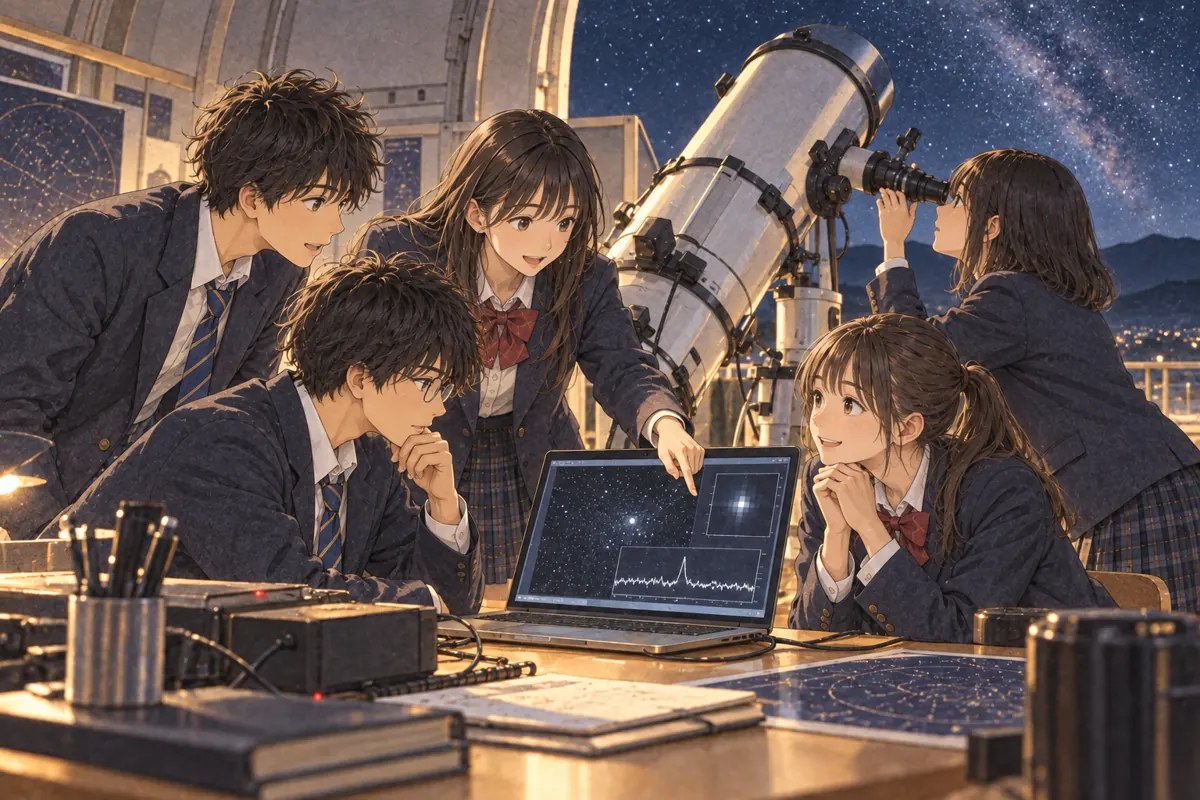
Our astronomy club recorded a faint point of light that appeared in several photographs. For one exciting hour, we imagined we had found something new. Our teacher asked us to check the camera, the dates, and the position of the point in each image before announcing anything.
We compared the photographs with an earlier set. The point shifted when the camera moved, not when the stars did. Dust or a reflection inside the equipment was a more likely explanation than a distant object. We cleaned the lens and repeated the observation on another night. The point did not return.
I felt disappointed, but the process had taught us to treat a surprising signal as a question. We kept the images and our notes, including the first enthusiastic guess. They showed how an explanation changed as evidence arrived.
The night sky still held more than we knew. Checking the ordinary causes of one bright dot had not made it less interesting. It had made us more careful about what we would call a discovery.
逐句跟读
点击任意一句听 Dicvo 的 Jenny 英语语音;开始连续播放前可选择每句播放次数。同一句的每遍之间、切换到下一句之前,都会留出约一遍句子时长供你跟读。原有整篇朗读仍可在上方播放。
请选择一句开始。
-
Our astronomy club recorded a faint point of light that appeared in several photographs.
-
For one exciting hour, we imagined we had found something new.
-
Our teacher asked us to check the camera, the dates, and the position of the point in each image before announcing anything.
-
We compared the photographs with an earlier set.
-
The point shifted when the camera moved, not when the stars did.
-
Dust or a reflection inside the equipment was a more likely explanation than a distant object.
-
We cleaned the lens and repeated the observation on another night.
-
The point did not return.
-
I felt disappointed, but the process had taught us to treat a surprising signal as a question.
-
We kept the images and our notes, including the first enthusiastic guess.
-
They showed how an explanation changed as evidence arrived.
-
The night sky still held more than we knew.
-
Checking the ordinary causes of one bright dot had not made it less interesting.
-
It had made us more careful about what we would call a discovery.
读懂了什么?
读完后,试着用一句话说出本文的主要意思,并从原文找出支持它的一句话。
查看中文译文
天文社在几张照片上拍到一个暗淡的亮点。那令人兴奋的一个小时里,我们以为发现了新事物。老师让我们先检查相机、拍摄日期,以及亮点在每张照片中的位置,再对外宣布。
我们将照片和较早的一组对照。相机移动时,亮点的位置也变了;星星移动时,它却没有相应变化。相比遥远的天体,设备内部的灰尘或反光更可能是原因。我们清洁镜头,另选一晚重新观测,亮点没有再出现。
我很失望,但核查过程教会我们把意外的信号当成一个问题。我们保留照片和笔记,包括最初兴奋的猜想。它们显示证据增多后,解释是怎样改变的。
夜空依然有许多未知。排查一个亮点的普通成因没有让夜空变得乏味,只让我们在称一件事为“发现”时更加谨慎。
本课重点词语
以下是本课重点词语的中文讲解;英文正文中有虚线的单词可悬停查看词义和发音。
- astronomy
- 天文学;社团观察夜空。
- faint
- 暗淡的;照片上的小亮点。
- appeared
- 出现;亮点见于多张图。
- position
- 位置;比较图像要核对。
- shifted
- 移动;亮点随相机变化。
- reflection
- 反光;可能来自设备内部。
- equipment
- 设备;先排查普通故障。
- observation
- 观测;清镜头后又做一次。
- signal
- 信号;异常先当作问题。
- discovery
- 发现;需要更扎实的证据。
背景知识
亮点随相机而非星空移动,说明设备造成的假象更可能;社团保留原始照片与猜想,记录解释如何变化。