
高中二年级 · 阅读系列
Lesson 54 · A Letter to a Partner School
文体:写给合作学校的信 · 朗读音轨 54
先听一遍
听听写信者怎样避免预设对方城镇一定有自己想象的水问题。
展开英文短文,再悬停查词
Dear friends, our geography class is studying access to clean water. At first we planned to ask, “How does your town solve its water problem?” Then we realized that we did not know whether your town had the problem we imagined.
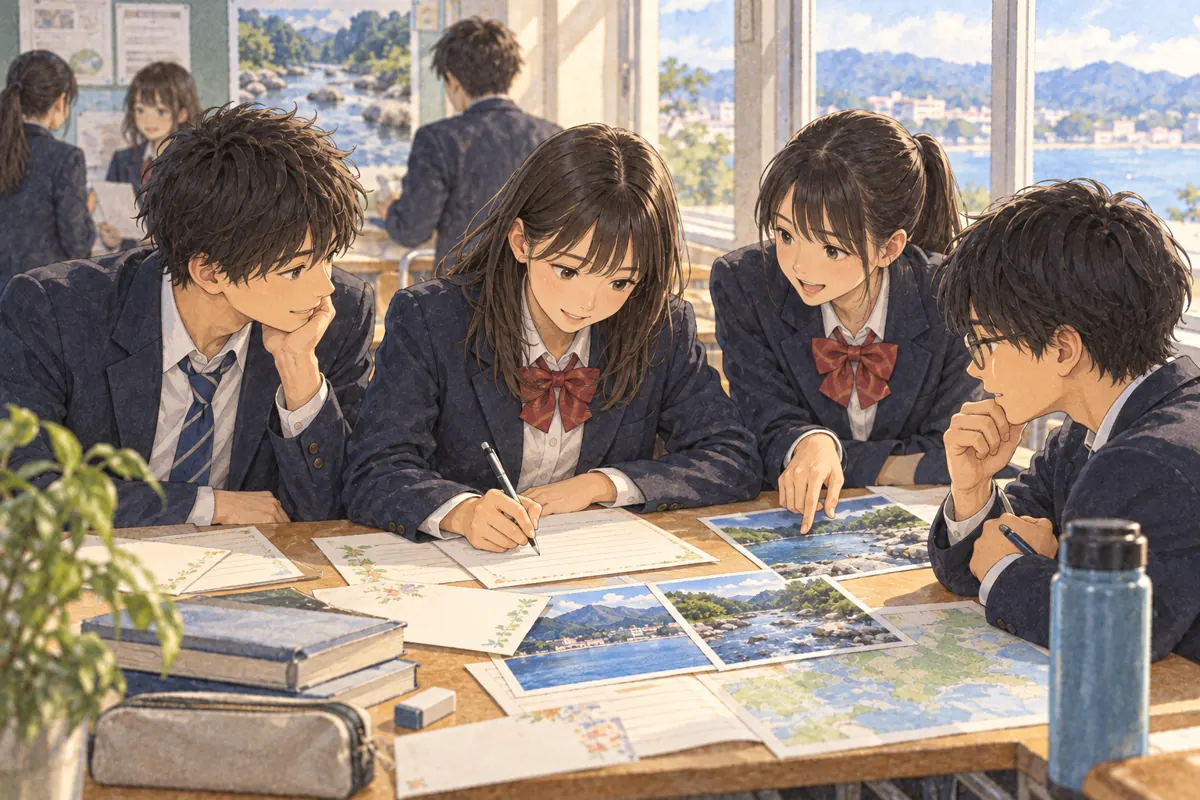
We changed the letter. We described how our own community stores water for emergencies and asked what water questions your class finds important. We also offered to exchange maps and explain how each was made. If a question felt too broad or personal, we invited you to choose another.
Your reply taught us that you were studying the river near your school, especially how people could use its banks safely. That topic differed from our expectation. It gave us a better starting point for a shared project: comparing how communities gather information before making plans.
Writing across distance requires curiosity and restraint. A useful question leaves space for the other person to describe their place, rather than forcing it into a story we wrote before listening. Yours, Class 2B.
逐句跟读
点击任意一句听 Dicvo 的 Jenny 英语语音;开始连续播放前可选择每句播放次数。同一句的每遍之间、切换到下一句之前,都会留出约一遍句子时长供你跟读。原有整篇朗读仍可在上方播放。
请选择一句开始。
-
Dear friends, our geography class is studying access to clean water.
-
At first we planned to ask, “How does your town solve its water problem?”
-
Then we realized that we did not know whether your town had the problem we imagined.
-
We changed the letter.
-
We described how our own community stores water for emergencies and asked what water questions your class finds important.
-
We also offered to exchange maps and explain how each was made.
-
If a question felt too broad or personal, we invited you to choose another.
-
Your reply taught us that you were studying the river near your school, especially how people could use its banks safely.
-
That topic differed from our expectation.
-
It gave us a better starting point for a shared project: comparing how communities gather information before making plans.
-
Writing across distance requires curiosity and restraint.
-
A useful question leaves space for the other person to describe their place, rather than forcing it into a story we wrote before listening.
-
Yours, Class 2B.
读懂了什么?
读完后,试着用一句话说出本文的主要意思,并从原文找出支持它的一句话。
查看中文译文
亲爱的朋友们:
我们地理课正在研究清洁用水的获取。起初,我们想问:‘你们镇怎样解决水的问题?’后来才意识到,我们并不知道你们的镇是否真的有我们想象的那个问题。
于是我们改写了信:先介绍自己社区如何为紧急情况储水,再问你们班认为哪些水相关的问题重要。我们也提议交换地图,并说明每张图怎样制作。若某个问题太宽泛或太私人,也欢迎你们另选。
回信让我们知道,你们研究的是学校附近的河,特别是人们怎样安全使用河岸。这和我们的预想不同,却给共同项目带来更好的起点:比较不同社区在规划前如何收集信息。
跨越距离写信,既需要好奇心,也需要克制。有用的问题应留出空间,让对方描述他们自己的地方,而不是硬把它塞进我们尚未倾听就写好的故事。
二年级 B 班 敬上
本课重点词语
以下是本课重点词语的中文讲解;英文正文中有虚线的单词可悬停查看词义和发音。
- access
- 获取;主题涉及清洁用水。
- imagined
- 想象的;不能先认定对方有问题。
- emergencies
- 紧急情况;本地储水用途。
- exchange
- 交换;两班可分享地图。
- personal
- 私人的;允许对方换问题。
- reply
- 回信;指出对方真实研究主题。
- expectation
- 预期;被河岸课题改变。
- gather
- 收集;规划前先找信息。
- restraint
- 克制;提问时不强加假设。
- forcing
- 强塞进;不能把对方放入预写故事。
背景知识
跨地区合作时,不宜把自己假设的难题直接套在对方身上。文中的学生先介绍自身情境,再开放地询问对方关切。