
高中二年级 · 阅读系列
Lesson 23 · Why the Bread Changed Shape
文体:烹饪实验记录 · 朗读音轨 23
先听一遍
听听第一轮做面包实验,除了温度还有什么条件不同。
展开英文短文,再悬停查词
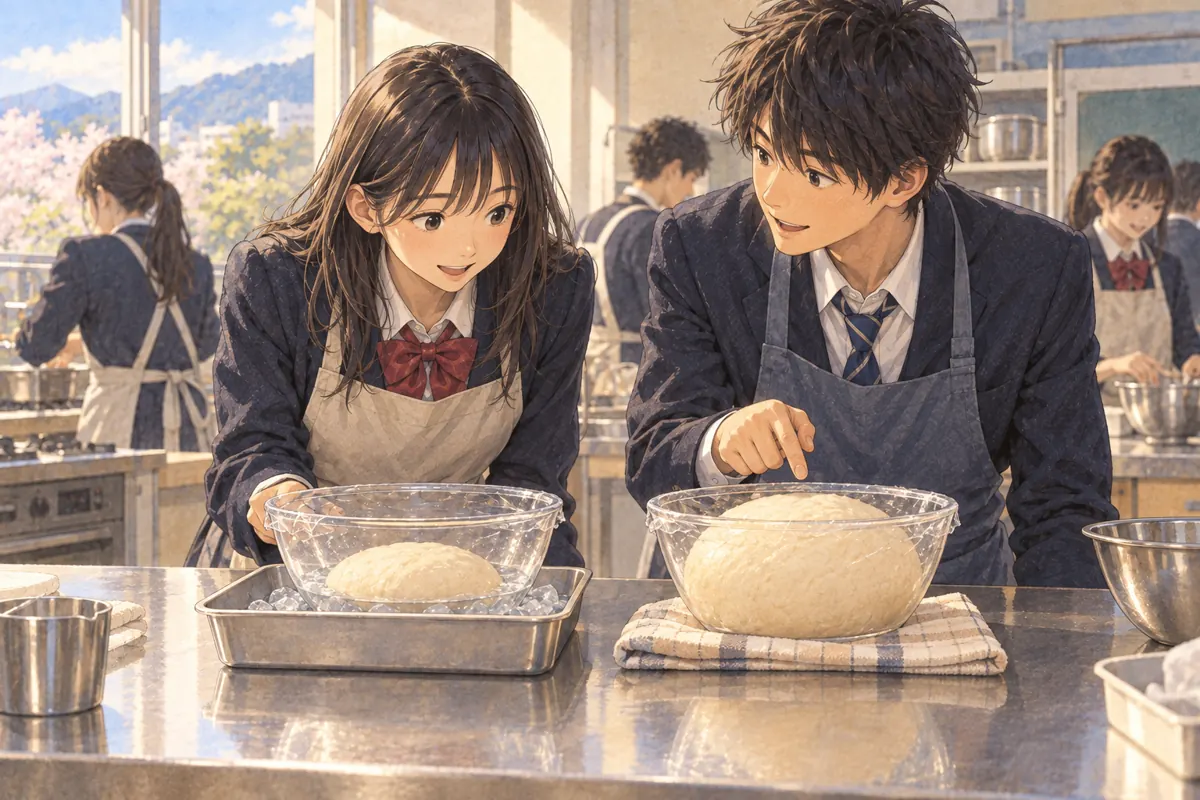
In cooking class, two groups made dough from the same recipe. One bowl stood near a warm window; the other remained in a cool room. By lunch, the first dough had risen much more. We wanted to say that warmth alone caused the difference.
Our teacher pointed out that the bowls were also covered differently. The dough near the window had a damp cloth, while the other had no cover. Next time, we used identical bowls and covers and changed only the location. The difference remained, though it was smaller.
We discussed the yeast in the dough and the gas produced as it used sugars. We could see bubbles and a change in volume, but not every chemical step directly. The experiment helped us connect an ordinary loaf with an invisible process.
At the end, we ate both breads. Their shapes told us something about the conditions under which they were made. They did not tell us the whole story until we remembered our method.
逐句跟读
点击任意一句听 Dicvo 的 Jenny 英语语音;开始连续播放前可选择每句播放次数。同一句的每遍之间、切换到下一句之前,都会留出约一遍句子时长供你跟读。原有整篇朗读仍可在上方播放。
请选择一句开始。
-
In cooking class, two groups made dough from the same recipe.
-
One bowl stood near a warm window; the other remained in a cool room.
-
By lunch, the first dough had risen much more.
-
We wanted to say that warmth alone caused the difference.
-
Our teacher pointed out that the bowls were also covered differently.
-
The dough near the window had a damp cloth, while the other had no cover.
-
Next time, we used identical bowls and covers and changed only the location.
-
The difference remained, though it was smaller.
-
We discussed the yeast in the dough and the gas produced as it used sugars.
-
We could see bubbles and a change in volume, but not every chemical step directly.
-
The experiment helped us connect an ordinary loaf with an invisible process.
-
At the end, we ate both breads.
-
Their shapes told us something about the conditions under which they were made.
-
They did not tell us the whole story until we remembered our method.
读懂了什么?
读完后,试着用一句话说出本文的主要意思,并从原文找出支持它的一句话。
查看中文译文
烹饪课上,两组按同一食谱揉面。一只碗放在温暖的窗边,另一只留在凉爽的房间。午饭时,窗边的面团发得高得多。我们想说差异全由温度造成。
老师指出,两只碗的覆盖方式也不同:窗边那只盖着湿布,另一只没盖。第二次,我们改用完全一样的碗和盖子,只改变放置地点。差异仍在,却比第一轮小。
我们讨论面团里的酵母如何利用糖产生气体。气泡和体积变化看得见,但每一步化学过程并非都能直接看到。实验让我们把寻常的面包与看不见的过程联系起来。
最后,我们把两份面包都吃了。形状透露出制作条件的一部分;如果忘了自己的实验方法,就无法把整个故事讲清。
本课重点词语
以下是本课重点词语的中文讲解;英文正文中有虚线的单词可悬停查看词义和发音。
- dough
- 面团;两组依同一食谱制作。
- recipe
- 食谱;配方相同仍可能有差异。
- risen
- 发起来的;窗边面团体积更大。
- warmth
- 温暖;原先被认作唯一原因。
- damp
- 湿的;窗边碗盖着湿布。
- identical
- 完全一样的;第二轮统一碗和盖。
- yeast
- 酵母;利用糖产生气体。
- produced
- 产生;气体使面团胀大。
- volume
- 体积;面团出现可见变化。
- invisible
- 看不见的;化学步骤未必能直接观察。
背景知识
比较温度影响时,应尽可能保持容器和覆盖方式一致。第一轮同时改变温度和湿布,第二轮才较能辨别放置位置的作用。