
高中二年级 · 阅读系列
Lesson 21 · The Plastic in the Sand Sample
文体:海滩采样记录 · 朗读音轨 21
先听一遍
听听学生为什么不把三小块沙地的发现当成整片海滩的结论。
展开英文短文,再悬停查词
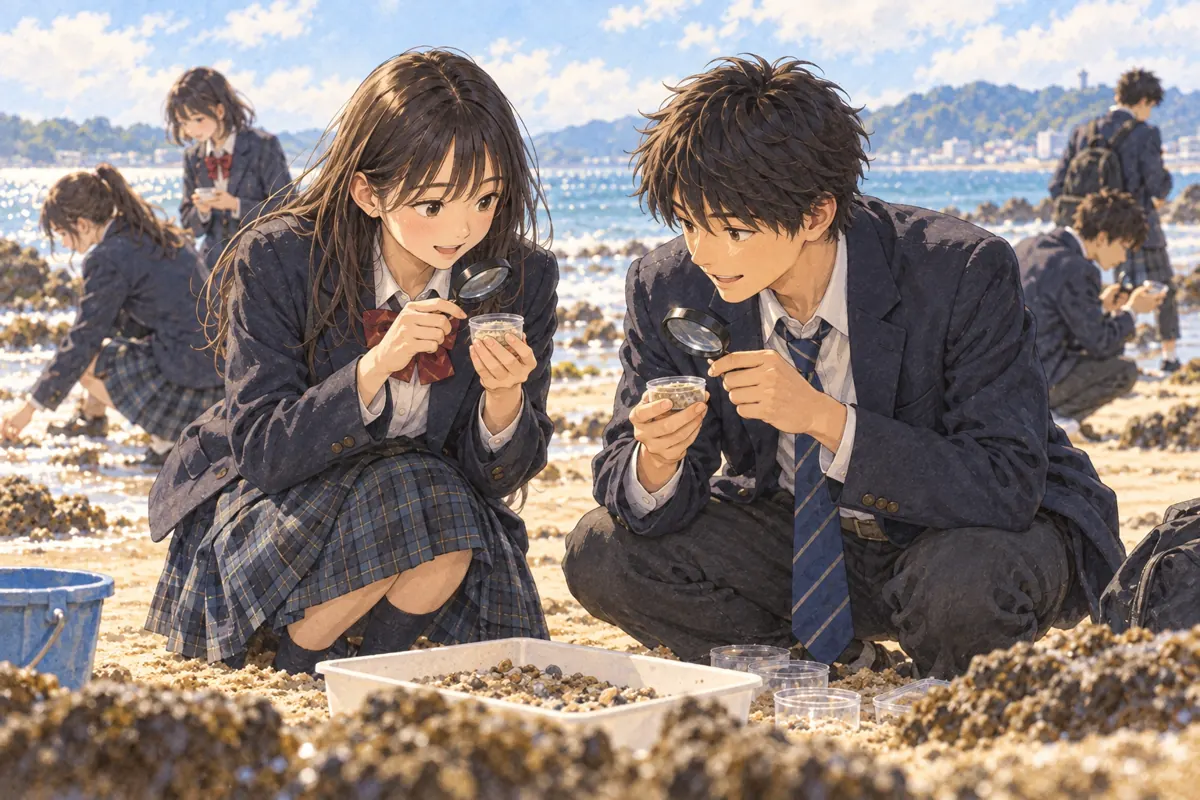
At the beach, our class collected sand from three marked squares. Under a magnifying lens, we found tiny colored pieces among the shells. Some looked like plastic, but appearance alone could not identify every fragment. Our teacher helped us separate what we observed from what we suspected.
We counted the visible pieces in each sample and recorded where the squares were. The area near the path contained more pieces than the others that day. Yet three small squares could not tell us the amount of plastic on the entire beach, much less where it had come from.
For our display, we put the samples beside a map of the collection sites. We added a question instead of a dramatic conclusion: would repeated samples after different weather show the same pattern? Visitors began suggesting ways to reduce litter near the path.
The tiny pieces mattered. So did the limits of our method. Being careful about one did not make us care less about the other.
逐句跟读
点击任意一句听 Dicvo 的 Jenny 英语语音;开始连续播放前可选择每句播放次数。同一句的每遍之间、切换到下一句之前,都会留出约一遍句子时长供你跟读。原有整篇朗读仍可在上方播放。
请选择一句开始。
-
At the beach, our class collected sand from three marked squares.
-
Under a magnifying lens, we found tiny colored pieces among the shells.
-
Some looked like plastic, but appearance alone could not identify every fragment.
-
Our teacher helped us separate what we observed from what we suspected.
-
We counted the visible pieces in each sample and recorded where the squares were.
-
The area near the path contained more pieces than the others that day.
-
Yet three small squares could not tell us the amount of plastic on the entire beach, much less where it had come from.
-
For our display, we put the samples beside a map of the collection sites.
-
We added a question instead of a dramatic conclusion: would repeated samples after different weather show the same pattern?
-
Visitors began suggesting ways to reduce litter near the path.
-
The tiny pieces mattered.
-
So did the limits of our method.
-
Being careful about one did not make us care less about the other.
读懂了什么?
读完后,试着用一句话说出本文的主要意思,并从原文找出支持它的一句话。
查看中文译文
在海滩上,我们班从三个标记好的方格里取了沙样。用放大镜观察时,贝壳间有细小的彩色碎片。有些看起来像塑料,但仅凭外观无法确定每一片是什么。老师帮助我们把实际观察到的与推测的内容分开。
我们数了每份样本里看得见的碎片,并记录方格位置。那一天,靠小路的区域比其他地方多。但三个小方格既不能说明整个海滩有多少塑料,更不能告诉我们碎片从何而来。
展示时,我们把样本摆在采集位置的地图旁。我们提出问题,而没有写出耸动的结论:在不同天气之后反复采样,还会看到同样的规律吗?访客也开始建议如何减少小路附近的垃圾。
细小碎片值得关注,方法的局限也同样值得关注。认真对待局限,并不会使我们对污染漠不关心。
本课重点词语
以下是本课重点词语的中文讲解;英文正文中有虚线的单词可悬停查看词义和发音。
- collected
- 采集;从三个方格取沙。
- magnifying lens
- 放大镜;观察细小碎片。
- pieces
- 碎片;贝壳间的彩色小物。
- observed
- 观察到;与推测分开写。
- suspected
- 怀疑;不能仅凭外观证实。
- sample
- 样本;每份都需标出位置。
- entire
- 整个的;三格不代表全海滩。
- collection sites
- 采集地点;地图标出位置。
- repeated
- 重复的;可在不同天气后再采样。
- limits
- 局限;方法不能回答所有问题。
背景知识
小样本可帮助提出问题,却不能直接推断整片海滩的数量或来源。学生保留采集位置与天气问题,区分‘像塑料’和‘已确认是塑料’。