
高中一年级 · 阅读系列
Lesson 51 · The Label on My Sneakers
文体:地理课观察 · 朗读音轨 51
先听一遍
听听鞋内标签能回答什么,又留下了哪些问题。
展开英文短文,再悬停查词
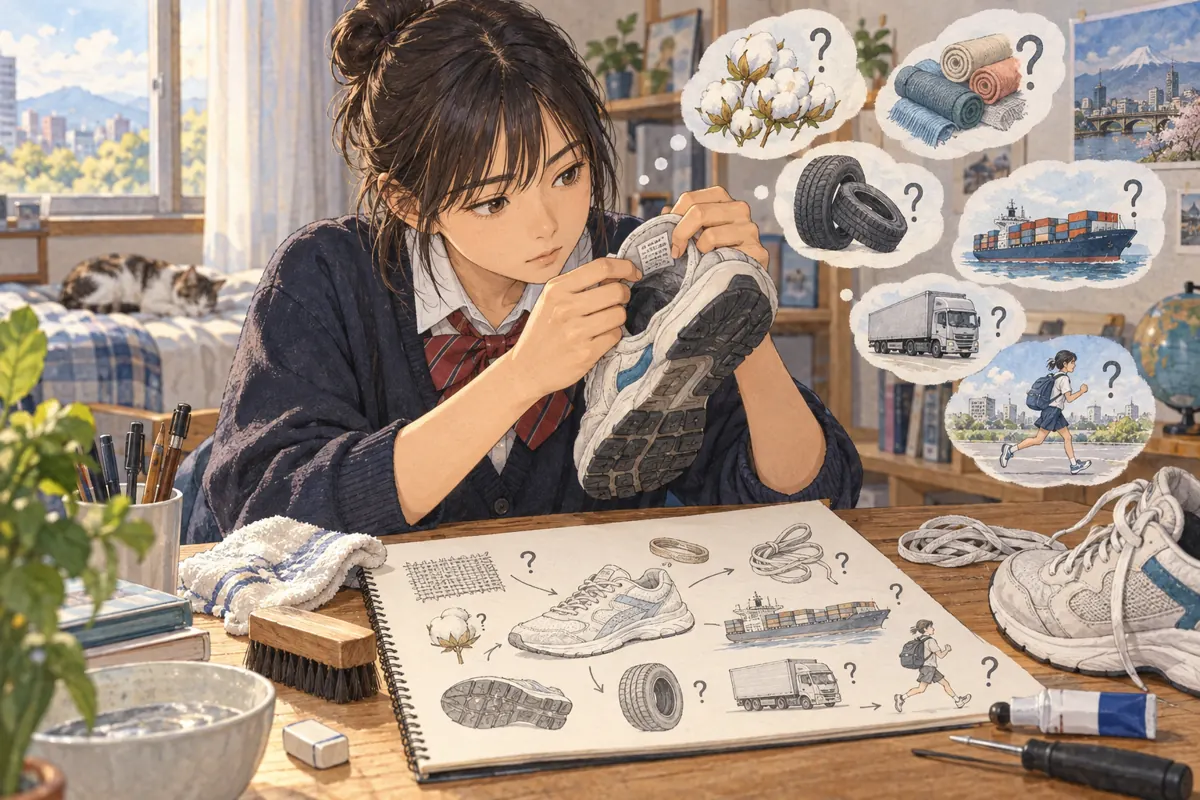
The label inside my sneakers showed the country where they had been assembled. I thought that was the whole story of where they came from. Then our geography teacher asked us to list the parts we could see: fabric, rubber, laces, and glue.
We could not tell from the label where every material had been produced. We looked at the company's public description of its supply chain, but it gave general information rather than the history of my exact pair. I made a diagram with questions instead of filling every box with a confident answer.
At home, I cleaned the sneakers and repaired a loose lace. Knowing that production involved many places did not tell me one perfect way to shop. It did make me more interested in how long I could use what I already owned.
The label answered one question: where final assembly happened. It opened several others about materials, workers, transport, and the life of a product after purchase.
逐句跟读
点击任意一句听 Dicvo 的 Jenny 英语语音;开始连续播放前可选择每句播放次数。同一句的每遍之间、切换到下一句之前,都会留出约一遍句子时长供你跟读。原有整篇朗读仍可在上方播放。
请选择一句开始。
-
The label inside my sneakers showed the country where they had been assembled.
-
I thought that was the whole story of where they came from.
-
Then our geography teacher asked us to list the parts we could see: fabric, rubber, laces, and glue.
-
We could not tell from the label where every material had been produced.
-
We looked at the company's public description of its supply chain, but it gave general information rather than the history of my exact pair.
-
I made a diagram with questions instead of filling every box with a confident answer.
-
At home, I cleaned the sneakers and repaired a loose lace.
-
Knowing that production involved many places did not tell me one perfect way to shop.
-
It did make me more interested in how long I could use what I already owned.
-
The label answered one question: where final assembly happened.
-
It opened several others about materials, workers, transport, and the life of a product after purchase.
读懂了什么?
读完后,试着用一句话说出本文的主要意思,并从原文找出支持它的一句话。
查看中文译文
运动鞋内侧的标签写着组装所在的国家。我原以为这就是鞋的全部产地信息。地理老师却让我们列出看得见的组成部分:布料、橡胶、鞋带和胶。
单凭标签,我们无法知道每一种材料产自哪里。我们查看了这家公司公开的供应链说明,可那里介绍的是一般情况,并不是我这双鞋的完整经历。我画了一张图,把不清楚的地方写成问题,没有自信满满地填满每一个方框。
回家后,我清洗了鞋子,修好一根松开的鞋带。知道生产过程涉及许多地方,并没有立刻告诉我哪一种购物方式完美无缺,却让我更想把已经拥有的东西用得久一些。
标签回答了一个问题:最后的组装在哪里完成。它也引出了有关材料、工人、运输,以及产品购入后使用过程的更多问题。
本课重点词语
以下是本课重点词语的中文讲解;英文正文中有虚线的单词可悬停查看词义和发音。
- label
- 标签;鞋内标注了组装地。
- assemble
- 组装;最后把部件制成鞋。
- material
- 材料;包括布料、橡胶等。
- produce
- 生产;各种材料可能来自不同地方。
- supply chain
- 供应链;公司公开的整体说明。
- general
- 一般的;说明没有追溯具体这双鞋。
- exact
- 确切的;某双鞋的完整经历未知。
- confident
- 有把握的;不应随意填满信息图。
- involve
- 涉及;生产经过许多地点。
- transport
- 运输;成品与材料流转的一环。
背景知识
‘组装地’只是产品生产链的一环,不等于所有材料的来源。学生区分了公开供应链的一般描述与某双鞋的具体经历,并保留无法证实的问题。