
Level 1 · Reading series
Lesson 49 · Same Gesture, Different Meaning
Audio track 49
Listen first
Listen once before opening the English passage.
Open the English passage and hover for word help
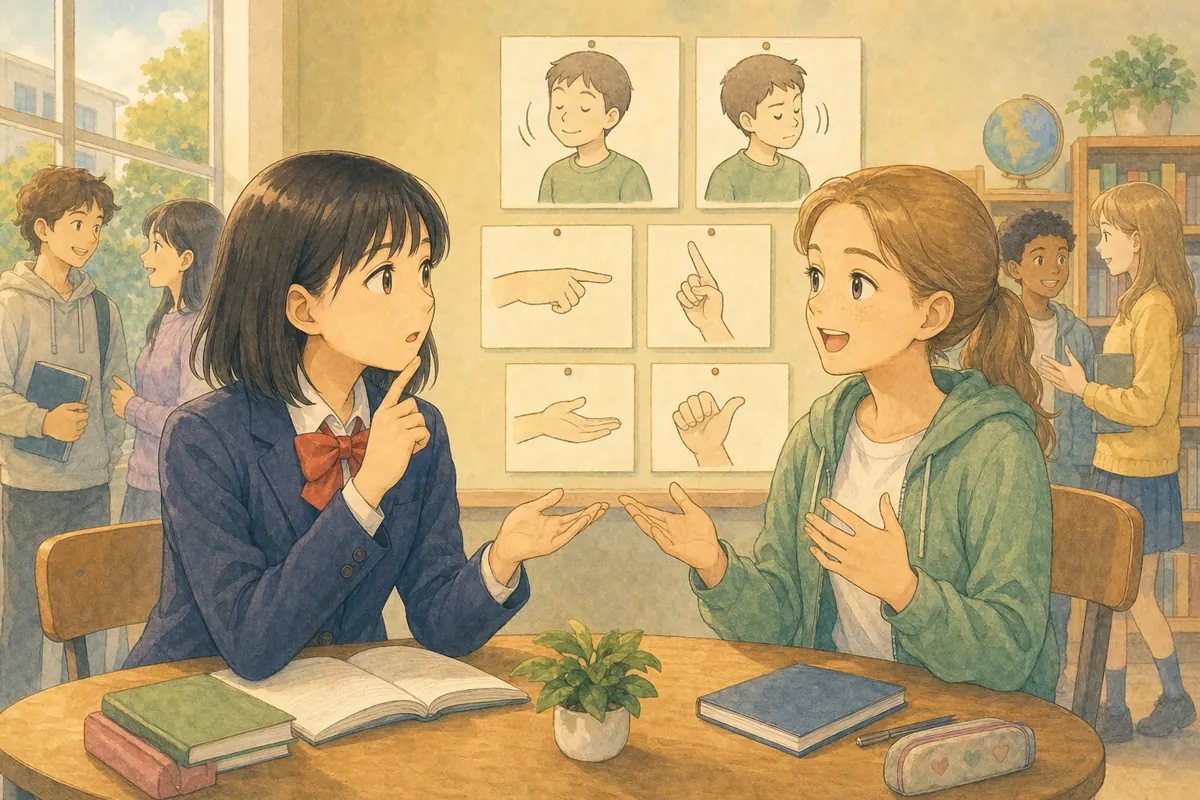
A gesture can speak without words. A nod often means yes, and people may shake their head for no. But body language is not the same in every culture.
The way people point can also seem normal or rude in different places. A traveler may misunderstand a sign or imitate it incorrectly.
Watch local people, but do not copy everything. If you are unsure about a gesture, ask politely. People within one culture also differ, so treat cultural guides as clues, not perfect rules.
Sentence practice
Play any sentence in Dicvo’s Jenny English voice. Before playing all, choose how many times each sentence plays. A practice pause about as long as the sentence follows each play, including before the next sentence. The complete reading remains above.
Choose a sentence to begin.
-
A gesture can speak without words.
-
A nod often means yes, and people may shake their head for no.
-
But body language is not the same in every culture.
-
The way people point can also seem normal or rude in different places.
-
A traveler may misunderstand a sign or imitate it incorrectly.
-
Watch local people, but do not copy everything.
-
If you are unsure about a gesture, ask politely.
-
People within one culture also differ, so treat cultural guides as clues, not perfect rules.
Check your understanding
After reading, state the main idea in one sentence and find a line that supports it.
Chinese translation
手势不用说话也能传达意思。点头通常表示‘是’,摇头可能表示‘不是’。但肢体语言在不同文化中并不完全一样。
指东西的方式,在某些地方很自然,在别处却可能被认为失礼。旅行者也可能误解手势,或模仿得不合适。
可以观察当地人的做法,但不要见到什么都照着做。对手势拿不准时,礼貌地问一问。同一文化中的人也有差异,所以文化指南只能作为线索,不能当成绝对规则。
Key words and expressions
Key terms have Chinese explanations. Hover over dotted words in the English passage for word help and pronunciation when available.
- gesture
- 手势;身势。
- nod
- 点头。
- shake one’s head
- 摇头;把头左右摆动。
- culture
- 文化。
- point
- 指向;也可指‘点’。本文作动词。
- rude
- 无礼的;失礼的。
- misunderstand
- 误解。
- imitate
- 模仿。
- local
- 当地的;本地的。
- ask
- 询问;请求。
Background notes (Chinese)
非语言沟通包括手势、姿态、表情和人与人之间的距离。它们的含义也会随情境和个人而变。不要认定‘这个国家的人一定这样’,留意对方反应并适时确认,能减少误解。
资料来源:UNESCO 关于文化沟通的资料。