
Level 1 · Reading series
Lesson 22 · The Spoon Looks Broken
Audio track 22
Listen first
Listen once before opening the English passage.
Open the English passage and hover for word help
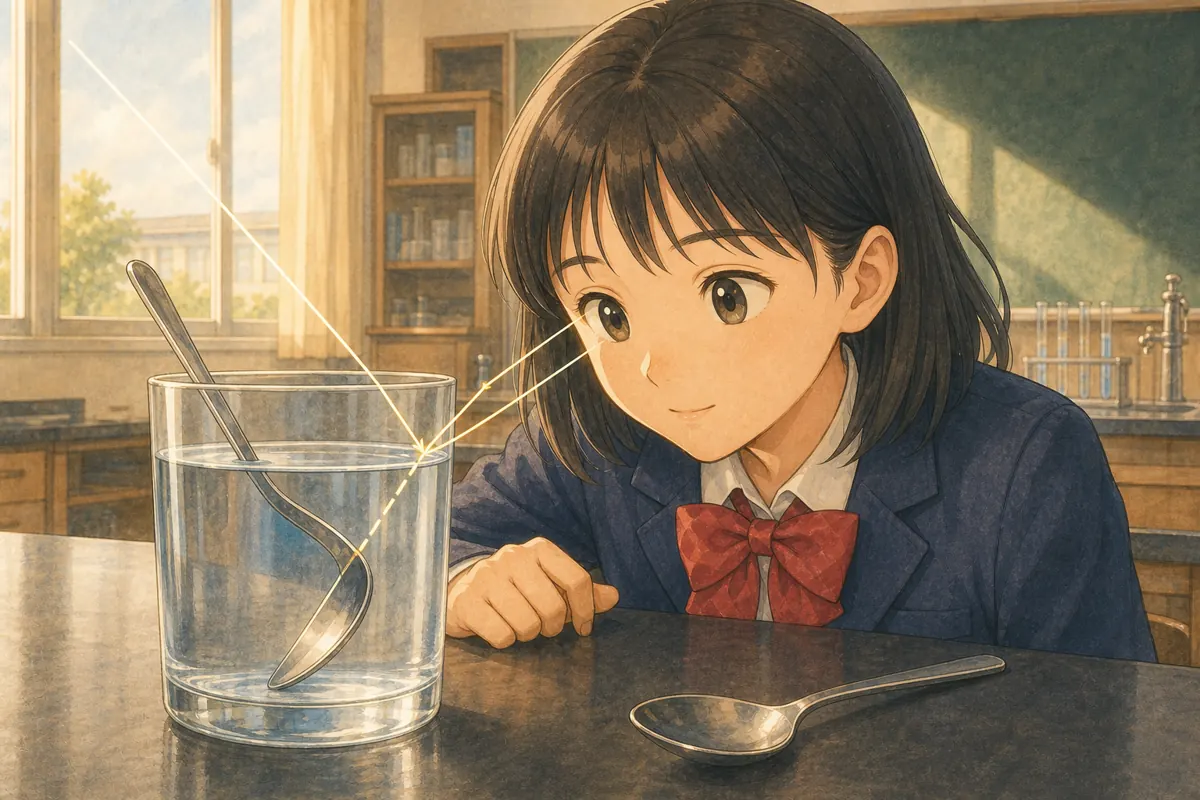
Put a spoon in a glass of water. From the side, the spoon may appear broken. Is it really broken? No.
Light passes through air and water before it reaches your eyes. At the surface of the water, the light bends and changes direction. Your eyes follow the light back in a straight line, so part of the spoon looks out of place. This bending of light is called refraction.
Sentence practice
Play any sentence in Dicvo’s Jenny English voice. Before playing all, choose how many times each sentence plays. A practice pause about as long as the sentence follows each play, including before the next sentence. The complete reading remains above.
Choose a sentence to begin.
-
Put a spoon in a glass of water.
-
From the side, the spoon may appear broken.
-
Is it really broken?
-
No.
-
Light passes through air and water before it reaches your eyes.
-
At the surface of the water, the light bends and changes direction.
-
Your eyes follow the light back in a straight line, so part of the spoon looks out of place.
-
This bending of light is called refraction.
Check your understanding
After reading, state the main idea in one sentence and find a line that supports it.
Chinese translation
把勺子放进一杯水里。从侧面看,勺子好像折断了。它真的断了吗?没有。
光进入我们的眼睛前,会穿过空气和水。在水面,光会弯折,改变传播方向。我们的眼睛却会沿直线追溯光的来处,因此勺子的一部分看起来错了位。这种光线弯折的现象叫作折射。
Key words and expressions
Key terms have Chinese explanations. Hover over dotted words in the English passage for word help and pronunciation when available.
- spoon
- 勺子。
- glass
- 玻璃杯;玻璃。本文指杯子。
- appear
- 看起来;出现。
- broken
- 破损的;折断的,是 break 的过去分词。
- pass through
- 穿过……。
- surface
- 表面。the surface of the water 指‘水面’。
- bend
- 弯曲;使……弯曲。
- change direction
- 改变方向。
- out of place
- 不在正确位置;显得不自然。
- refraction
- 折射;光通过不同介质的交界面时改变方向的现象。
Background notes (Chinese)
光斜着从空气进入水中时,传播速度和方向会改变,这就是折射。水里的鱼看起来与实际位置略有差别,以及透镜能够成像,都与折射有关。
资料来源:The Physics Classroom, Refraction and the Ray Model of Light。