
High 3 · Reading series
Lesson 54 · A School Uniform's Long Journey
Audio track 54
Listen first
Listen once before opening the English passage.
Open the English passage and hover for word help
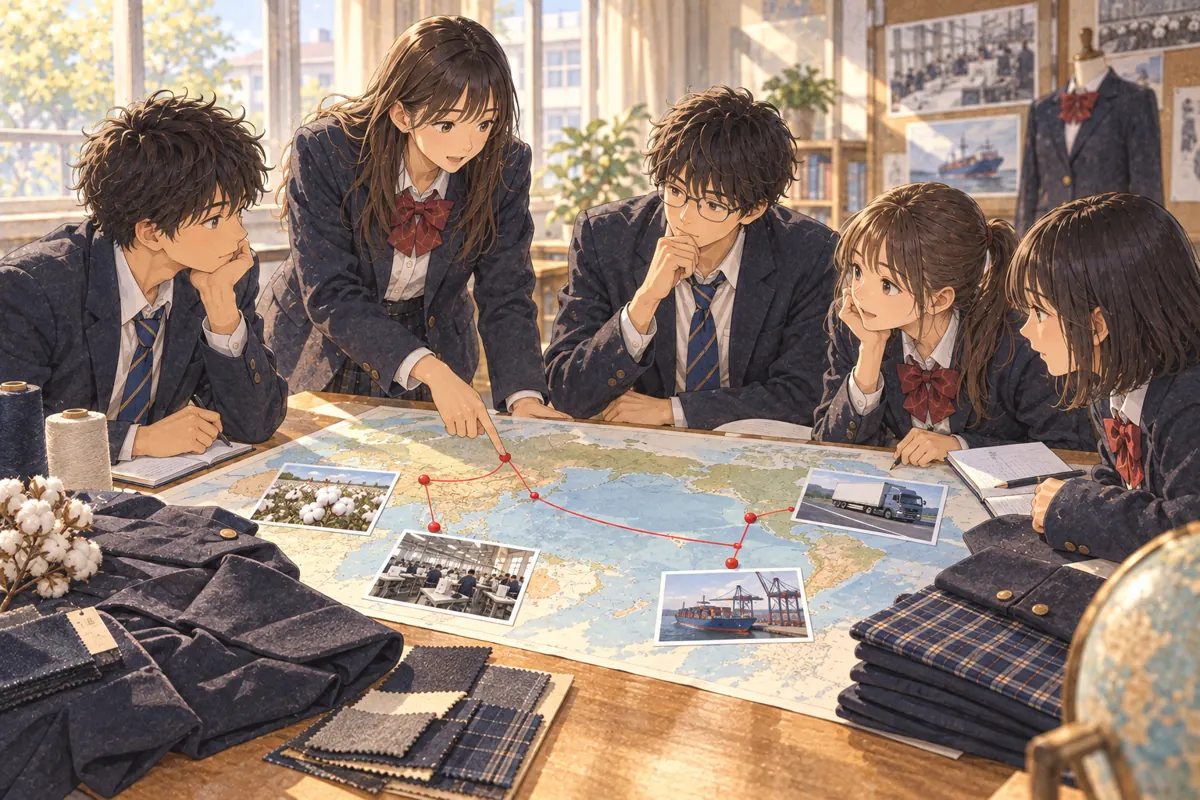
The label inside my school blazer named a country where it had been made. I began tracing the uniform's history for a class project. The fabric, buttons, design, and final sewing might have come from different places. The label was a useful clue, not a complete map.
We asked the supplier what information it could share. Some production stages were documented; others were handled by different partners and were less clear to us. I resisted writing that every worker faced the same conditions. We could describe the route we had evidence for and identify where the record stopped.
The school had to choose a uniform that families could afford and students could wear comfortably. We suggested that future purchasing discussions include durability, repair options, and clearer information about production, rather than looking only at the first price.
My blazer felt familiar after three years. Learning about its possible journey did not make it foreign to me. It showed how an ordinary part of school life could connect decisions made in many places.
Sentence practice
Play any sentence in Dicvo’s Jenny English voice. Before playing all, choose how many times each sentence plays. A practice pause about as long as the sentence follows each play, including before the next sentence. The complete reading remains above.
Choose a sentence to begin.
-
The label inside my school blazer named a country where it had been made.
-
I began tracing the uniform's history for a class project.
-
The fabric, buttons, design, and final sewing might have come from different places.
-
The label was a useful clue, not a complete map.
-
We asked the supplier what information it could share.
-
Some production stages were documented; others were handled by different partners and were less clear to us.
-
I resisted writing that every worker faced the same conditions.
-
We could describe the route we had evidence for and identify where the record stopped.
-
The school had to choose a uniform that families could afford and students could wear comfortably.
-
We suggested that future purchasing discussions include durability, repair options, and clearer information about production, rather than looking only at the first price.
-
My blazer felt familiar after three years.
-
Learning about its possible journey did not make it foreign to me.
-
It showed how an ordinary part of school life could connect decisions made in many places.
Check your understanding
After reading, state the main idea in one sentence and find a line that supports it.
Chinese translation
我的校服西装外套内侧标签写着制造国家。我为课堂项目追查它的来历:布料、纽扣、设计和最后缝制可能分属不同地方。标签是有用的线索,却不是完整地图。
我们问供应商能分享哪些信息。有些生产环节有记录,另一些由不同合作方负责,对我们不够清楚。我没有写成每位工人都处在同样的工作条件下,而是描述有证据的路线,标出记录到哪里中断。
学校选校服还需考虑家庭能否负担、学生穿着是否舒适。我们建议未来采购讨论除初始售价外,也考虑耐穿程度、修补可能性和更清楚的生产信息。
穿了三年,外套早已熟悉。了解它可能走过的路没有让它显得陌生,反而让我看见日常校园生活如何连接许多地方作出的决定。
Key words and expressions
Key terms have Chinese explanations. Hover over dotted words in the English passage for word help and pronunciation when available.
- blazer
- 西装外套;校服的一部分。
- fabric
- 布料;可能另有产地。
- sewing
- 缝制;最终制造环节。
- clue
- 线索;标签并非全图。
- supplier
- 供应商;提供部分资料。
- production stages
- 生产环节;可能跨越多地。
- documented
- 有记录的;可说明的路线。
- durability
- 耐用性;采购时要考虑。
- purchasing
- 采购;学校选择校服。
- ordinary
- 平常的;衣物联系远方决定。
Background notes (Chinese)
制造国标签只对应部分生产过程;采购校服应兼顾价格、舒适、耐用、可修理性及供应信息。