
High 3 · Reading series
Lesson 22 · The Seedlings That Grew Differently
Audio track 22
Listen first
Listen once before opening the English passage.
Open the English passage and hover for word help
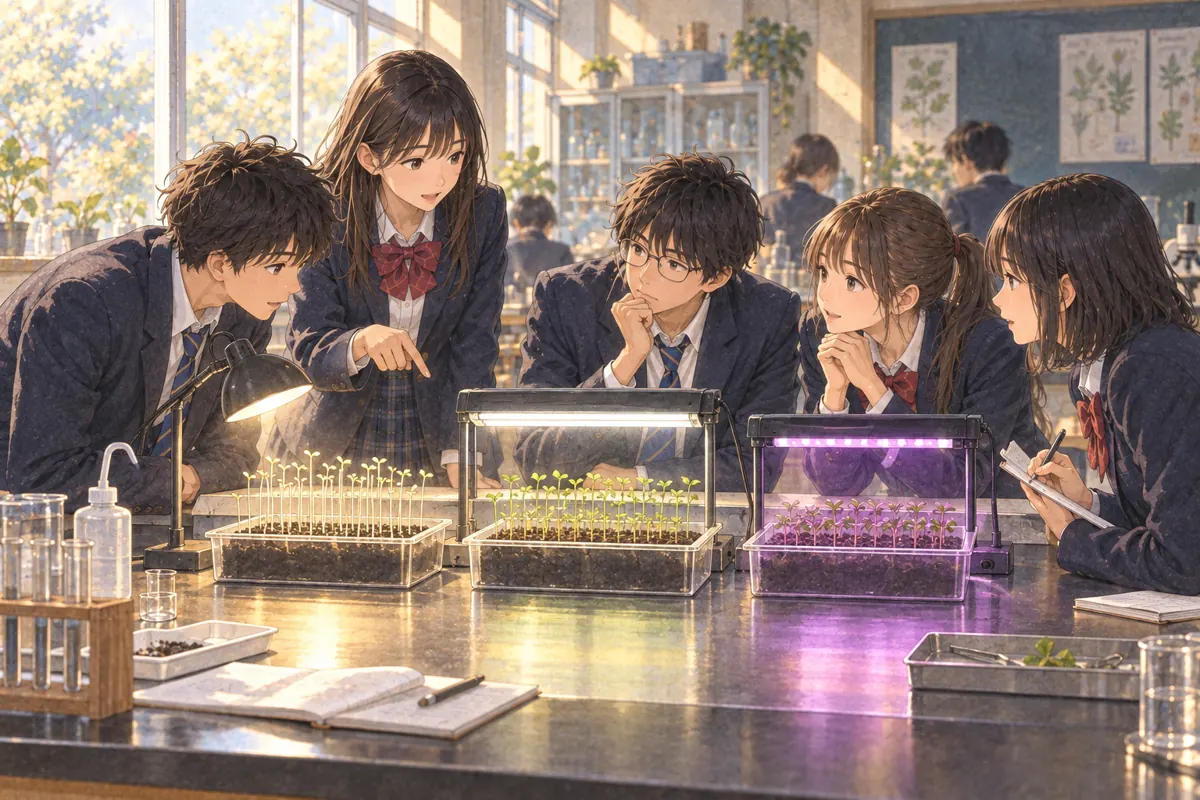
We placed two groups of seedlings by different windows to examine the effect of light. After two weeks, one group was taller. Our first conclusion was simple: brighter light had caused faster growth. Then we noticed that the taller plants had also received water from a different student.
We repeated the trial with identical pots and a written watering schedule. The results still differed, though less dramatically. We measured height and counted leaves, discovering that the tallest plant did not always have the most leaves. Even the word “growth” needed a clear definition.
Our report did not claim that light had no effect. It said our small classroom test could not isolate it completely. We described the remaining differences in temperature and the number of plants, then suggested a longer test.
The seedlings were living things, not identical machines. Their variation made the project harder and more interesting. Careful science did not remove every uncertainty; it helped us say exactly where that uncertainty remained.
Sentence practice
Play any sentence in Dicvo’s Jenny English voice. Before playing all, choose how many times each sentence plays. A practice pause about as long as the sentence follows each play, including before the next sentence. The complete reading remains above.
Choose a sentence to begin.
-
We placed two groups of seedlings by different windows to examine the effect of light.
-
After two weeks, one group was taller.
-
Our first conclusion was simple: brighter light had caused faster growth.
-
Then we noticed that the taller plants had also received water from a different student.
-
We repeated the trial with identical pots and a written watering schedule.
-
The results still differed, though less dramatically.
-
We measured height and counted leaves, discovering that the tallest plant did not always have the most leaves.
-
Even the word “growth” needed a clear definition.
-
Our report did not claim that light had no effect.
-
It said our small classroom test could not isolate it completely.
-
We described the remaining differences in temperature and the number of plants, then suggested a longer test.
-
The seedlings were living things, not identical machines.
-
Their variation made the project harder and more interesting.
-
Careful science did not remove every uncertainty; it helped us say exactly where that uncertainty remained.
Check your understanding
After reading, state the main idea in one sentence and find a line that supports it.
Chinese translation
我们把两组幼苗放在不同的窗边,想研究光照的影响。两周后,一组长得更高。最初的结论很简单:更强的光让它们长得更快。随后,我们发现较高的一组还由另一位同学浇水。
我们用相同的花盆和书面的浇水日程重做实验。结果仍有差异,但不像第一次那样明显。我们测量高度,也数叶片,发现最高的植株并不总有最多的叶子。连“生长”一词也需要明确定义。
报告没有说光照毫无影响,而是说这次小规模的教室实验无法完全单独检验它。我们写明温度和植株数量仍有差异,并建议做更长时间的实验。
幼苗是活物,不是完全相同的机器。个体差异使项目更难,也更有意思。严谨的科学不会消除所有不确定性,却能帮助我们准确说出不确定性在哪里。
Key words and expressions
Key terms have Chinese explanations. Hover over dotted words in the English passage for word help and pronunciation when available.
- seedlings
- 幼苗;两组实验对象。
- examine
- 研究;观察光的影响。
- conclusion
- 结论;起初下得太快。
- identical
- 相同的;第二次统一花盆。
- schedule
- 日程表;固定浇水安排。
- dramatically
- 显著地;差异变小了。
- definition
- 定义;要说清何为生长。
- isolate
- 单独检验;排除其他因素很难。
- variation
- 差异;活植株不会完全一样。
- uncertainty
- 不确定性;报告应明确指出。
Background notes (Chinese)
第一次实验同时改变了光照和浇水条件,无法单独判断原因。重做时仍需界定测量指标和报告局限。