
High 2 · Reading series
Lesson 48 · The Museum Label We Questioned
Audio track 48
Listen first
Listen once before opening the English passage.
Open the English passage and hover for word help
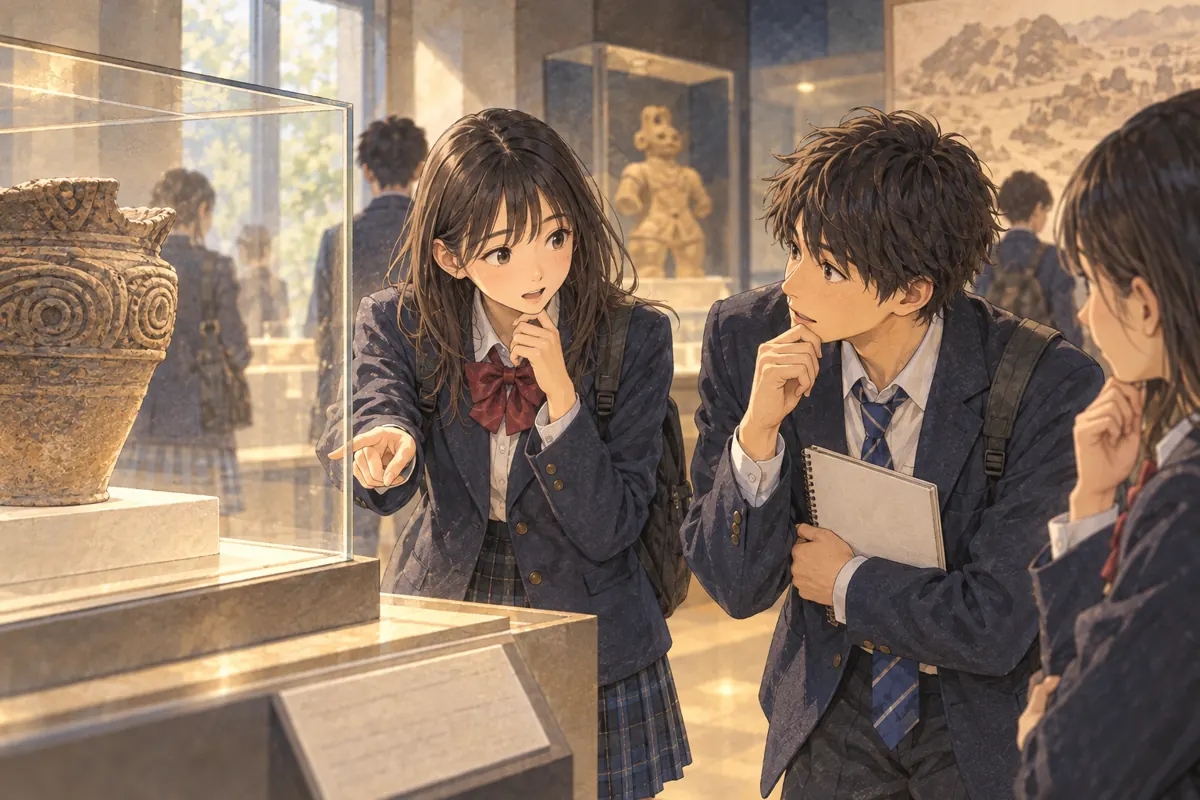
At a small museum, we saw a fishing tool beside a label that said it had been “discovered” a century ago. My classmate asked, “Discovered by whom?” People in the region had used such tools long before a collector placed one in the museum.
We asked the curator about the label. She explained that it described the date the object entered a collection, not the beginning of its history. She invited us to examine an older record and to speak with a local fishing group about how similar tools were made.
Our class drafted an alternative label. It included the collection date, the community's knowledge, and a note about what researchers still did not know. We sent it to the museum as a suggestion, not as a claim that we had solved the history.
A short label cannot contain every voice. It can, however, show which question remains open. The word “discovered” had seemed small until we noticed whose knowledge it left outside the sentence.
Sentence practice
Play any sentence in Dicvo’s Jenny English voice. Before playing all, choose how many times each sentence plays. A practice pause about as long as the sentence follows each play, including before the next sentence. The complete reading remains above.
Choose a sentence to begin.
-
At a small museum, we saw a fishing tool beside a label that said it had been “discovered” a century ago.
-
My classmate asked, “Discovered by whom?”
-
People in the region had used such tools long before a collector placed one in the museum.
-
We asked the curator about the label.
-
She explained that it described the date the object entered a collection, not the beginning of its history.
-
She invited us to examine an older record and to speak with a local fishing group about how similar tools were made.
-
Our class drafted an alternative label.
-
It included the collection date, the community's knowledge, and a note about what researchers still did not know.
-
We sent it to the museum as a suggestion, not as a claim that we had solved the history.
-
A short label cannot contain every voice.
-
It can, however, show which question remains open.
-
The word “discovered” had seemed small until we noticed whose knowledge it left outside the sentence.
Check your understanding
After reading, state the main idea in one sentence and find a line that supports it.
Chinese translation
在一间小博物馆里,我们看到一件捕鱼工具,旁边的展签说它在一个世纪前被‘发现’。同学问:‘被谁发现?’早在收藏家把其中一件带进博物馆前,当地人已经使用同类工具很久了。
我们向策展人请教。她解释,展签写的是物件进入收藏的日期,不是其历史的起点。她邀请我们查看更早的记录,也与本地捕鱼团体交流,了解类似工具怎样制作。
全班草拟了一版替代展签,写入收藏日期、社区的知识,以及研究者尚未弄清的地方。我们把它作为建议寄给博物馆,没有声称自己已经解决全部历史问题。
简短展签容不下每一种声音,却可以指出哪些问题仍有待回答。‘发现’这个词原本看似不起眼,直到我们留意到:它把谁的知识排除在句子之外。
Key words and expressions
Key terms have Chinese explanations. Hover over dotted words in the English passage for word help and pronunciation when available.
- label
- 展签;说明捕鱼工具。
- discovered
- 发现;词语可能忽略原使用者。
- collector
- 收藏家;把物件带入博物馆。
- curator
- 策展人;解释日期含义。
- object
- 物件;工具本身早有使用史。
- collection
- 收藏;进入馆藏的时间。
- community
- 社区;当地人持有制作知识。
- alternative
- 替代的;学生草拟新版说明。
- researchers
- 研究者;仍有尚未弄清之处。
- knowledge
- 知识;不只存在于馆藏记录。
Background notes (Chinese)
‘进入馆藏’与‘首次被人认识’是不同的事。学生在展签里保留收藏记录,同时承认当地社区早已有相关知识。