
High 2 · Reading series
Lesson 25 · A Small Error in a Big Model
Audio track 25
Listen first
Listen once before opening the English passage.
Open the English passage and hover for word help
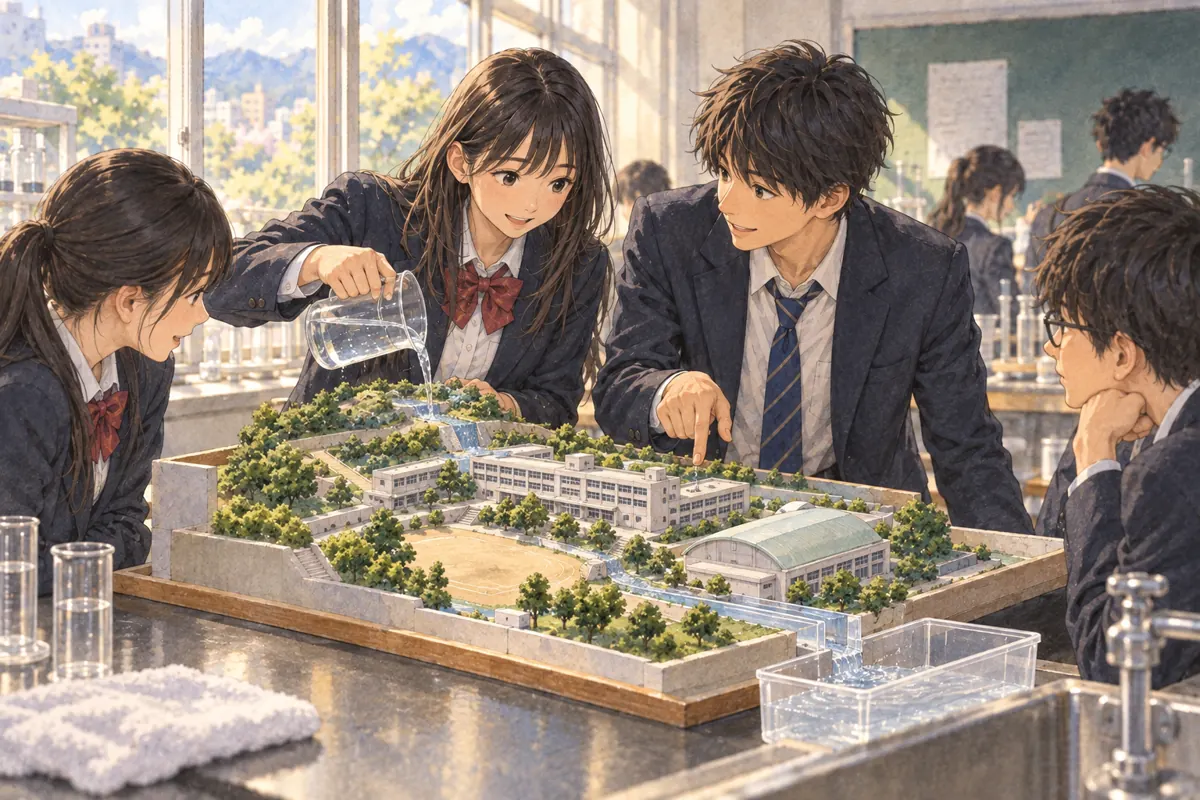
We built a model of our school building to study how rainwater might move across the grounds. The roof and paths looked accurate, but we had made the slope beside the gym too steep. During our demonstration, water rushed toward a place that rarely flooded in real life.
At first we wanted to hide the mistake and show only the parts that worked. Our teacher asked what the unexpected flow taught us. We measured the real slope again and rebuilt that section. The water then followed a different route, closer to what we had observed after rain.
The corrected model still left out drains, soil, and changes in rainfall. It was useful for asking where water could collect, not for predicting every future storm. We placed a card beside it listing these limitations.
A model does not have to contain the whole world to help us think. It does need us to notice which details matter for the question we are asking.
Sentence practice
Play any sentence in Dicvo’s Jenny English voice. Before playing all, choose how many times each sentence plays. A practice pause about as long as the sentence follows each play, including before the next sentence. The complete reading remains above.
Choose a sentence to begin.
-
We built a model of our school building to study how rainwater might move across the grounds.
-
The roof and paths looked accurate, but we had made the slope beside the gym too steep.
-
During our demonstration, water rushed toward a place that rarely flooded in real life.
-
At first we wanted to hide the mistake and show only the parts that worked.
-
Our teacher asked what the unexpected flow taught us.
-
We measured the real slope again and rebuilt that section.
-
The water then followed a different route, closer to what we had observed after rain.
-
The corrected model still left out drains, soil, and changes in rainfall.
-
It was useful for asking where water could collect, not for predicting every future storm.
-
We placed a card beside it listing these limitations.
-
A model does not have to contain the whole world to help us think.
-
It does need us to notice which details matter for the question we are asking.
Check your understanding
After reading, state the main idea in one sentence and find a line that supports it.
Chinese translation
为了研究雨水怎样流过校园,我们制作了校舍模型。屋顶与小路看起来准确,但体育馆旁的坡面做得太陡。演示时,水冲向了现实中很少积水的地方。
起初,我们想藏起错误,只展示模型有用的部分。老师却问,意外水流教会了我们什么。我们重新测量真实坡度,重做那一段。此后,水走上另一条更接近雨后观察到的路线。
修正后的模型仍省略了排水口、土壤和降雨变化。它可用来思考水可能汇集的位置,却不能预测未来每场暴雨。我们在模型旁放了一张卡片,列出这些限制。
模型不必容纳整个世界才能帮助思考,但我们必须留意:对于自己正在问的问题,哪些细节会改变答案。
Key words and expressions
Key terms have Chinese explanations. Hover over dotted words in the English passage for word help and pronunciation when available.
- model
- 模型;用来模拟雨水流动。
- accurate
- 准确的;屋顶与小路看起来如此。
- slope
- 坡度;体育馆旁做得太陡。
- demonstration
- 演示;错误流向被看见。
- flooded
- 积水;现实中该处很少发生。
- unexpected
- 意外的;水流方向出乎预料。
- corrected
- 修正过的;重新测坡后改模型。
- drains
- 排水口;模型未包含的因素。
- predicting
- 预测;不能据此断言每场暴雨。
- limitations
- 局限;用卡片说明模型边界。
Background notes (Chinese)
模型用简化现实的方式探索问题,关键参数若有误就会误导结果。学生改正坡度后仍注明排水、土壤等未纳入因素。