
High 1 · Reading series
Lesson 57 · The Path That Was Not Straight
Audio track 57
Listen first
Listen once before opening the English passage.
Open the English passage and hover for word help
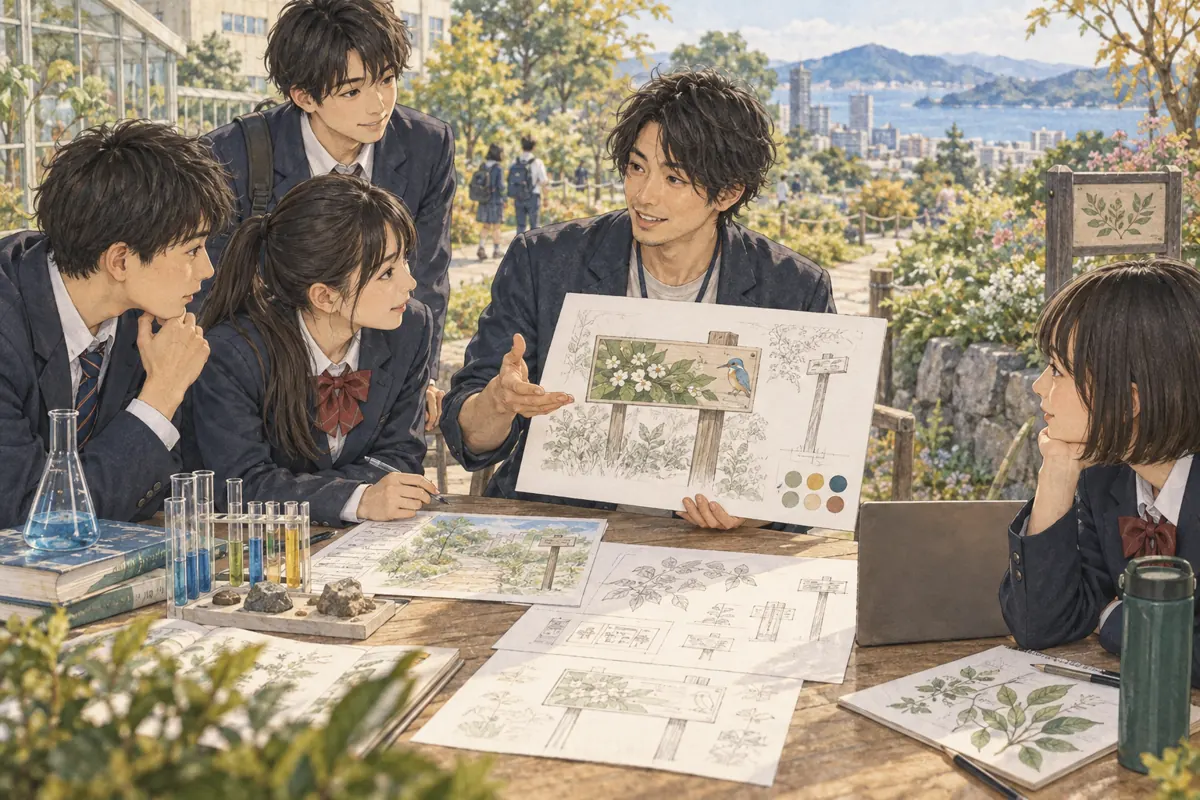
Our class interviewed a former student who now designs public signs. In high school, she had loved chemistry and planned to work in a laboratory. I expected her story to explain why she had given up that interest.
Instead, she told us that chemistry had taught her to check evidence carefully. At college, she helped a student group explain a science exhibition to visitors. She became interested in how a short phrase or a simple symbol could help someone understand a complex idea. Later, she studied design.
“Was changing direction frightening?” I asked. “Of course,” she said. “But the earlier learning did not disappear. I carried some of it into a new question.” She showed us a sign she had designed for a public garden, then described the many drafts behind it.
Her path was not a straight line, but it was not a series of unrelated accidents either. One interest had opened a question that led to another.
Sentence practice
Play any sentence in Dicvo’s Jenny English voice. Before playing all, choose how many times each sentence plays. A practice pause about as long as the sentence follows each play, including before the next sentence. The complete reading remains above.
Choose a sentence to begin.
-
Our class interviewed a former student who now designs public signs.
-
In high school, she had loved chemistry and planned to work in a laboratory.
-
I expected her story to explain why she had given up that interest.
-
Instead, she told us that chemistry had taught her to check evidence carefully.
-
At college, she helped a student group explain a science exhibition to visitors.
-
She became interested in how a short phrase or a simple symbol could help someone understand a complex idea.
-
Later, she studied design.
-
“Was changing direction frightening?” I asked.
-
“Of course,” she said.
-
“But the earlier learning did not disappear.
-
I carried some of it into a new question.”
-
She showed us a sign she had designed for a public garden, then described the many drafts behind it.
-
Her path was not a straight line, but it was not a series of unrelated accidents either.
-
One interest had opened a question that led to another.
Check your understanding
After reading, state the main idea in one sentence and find a line that supports it.
Chinese translation
我们班采访了一位如今设计公共标识的校友。高中时,她喜欢化学,计划到实验室工作。我本以为她会讲自己为什么放弃了这个兴趣。
她却说,化学教会她认真核查证据。上大学后,她帮助一个学生团体向访客介绍科学展览。她开始对另一件事感兴趣:一句简短的话或一个简单符号,怎样帮助别人理解复杂的想法。后来,她学习了设计。
我问:‘改变方向会害怕吗?’她说:‘当然会。但以前学过的东西没有消失。我把其中一部分带到了新的问题里。’她给我们看一块自己设计的公共花园标识,又讲起最终版本背后的许多草稿。
她的道路不是一条直线,却也不是一连串毫无关联的偶然。一种兴趣引出一个问题,那个问题又通往另一个。
Key words and expressions
Key terms have Chinese explanations. Hover over dotted words in the English passage for word help and pronunciation when available.
- former student
- 校友;曾在本校就读的人。
- public sign
- 公共标识;她现在设计的作品。
- chemistry
- 化学;高中时喜爱的学科。
- laboratory
- 实验室;原计划工作的地方。
- give up
- 放弃;主人公以为她不再用到旧兴趣。
- exhibition
- 展览;大学时参与解释科学内容。
- symbol
- 符号;可帮助人理解复杂想法。
- direction
- 方向;职业兴趣后来发生变化。
- carry into
- 带入;早期学习进入新问题。
- unrelated
- 毫无关联的;她的经历并非随机拼接。
Background notes (Chinese)
学习路径可能转弯,但先前练出的求证习惯能迁移到新领域。校友把化学中的证据意识与标识设计中的清晰表达连接了起来。